National Mall At Night: A Visitor's Guide
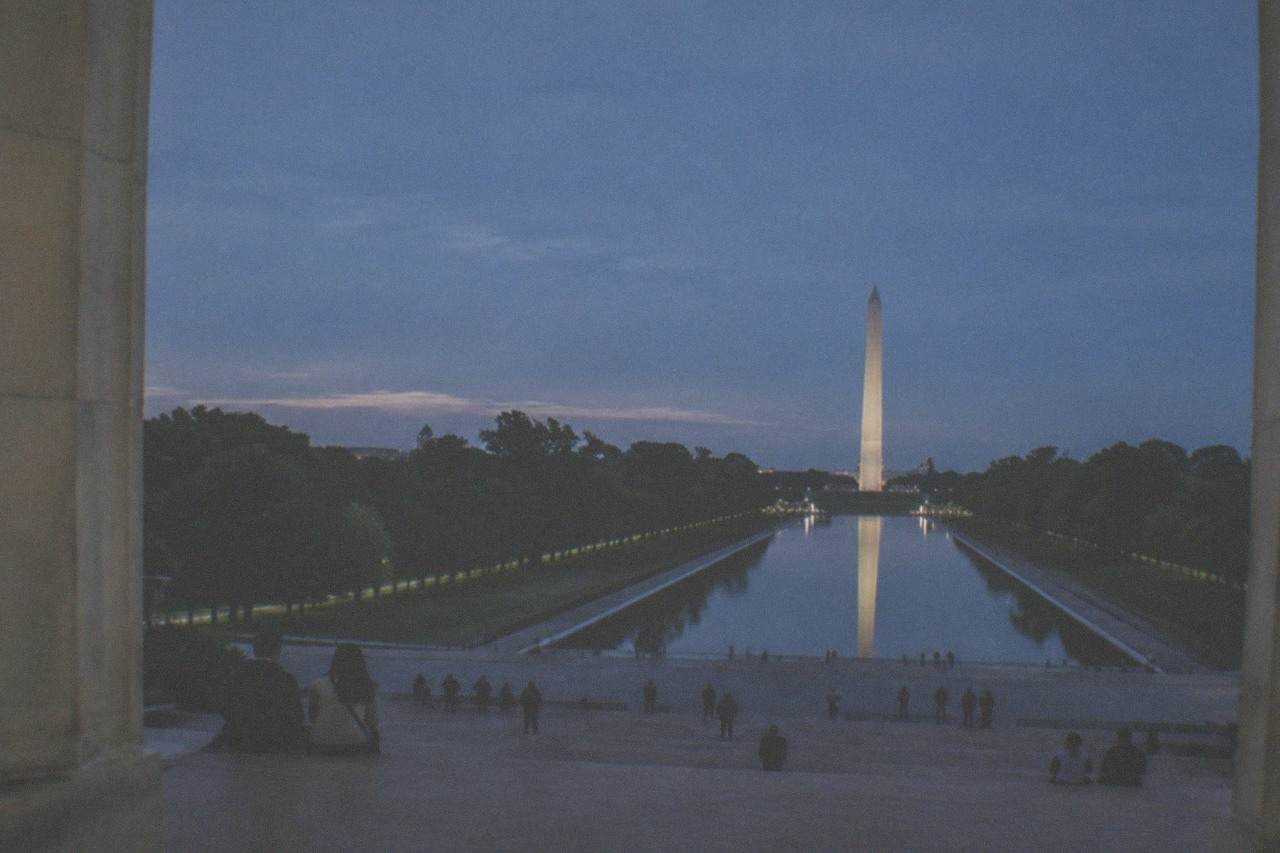
The National Mall never locks its gates. The outdoor memorial grounds stay open around the clock, which is the single fact that makes an entire category of night tours possible. Here is how the Mall actually works after dark, what a tour route covers, and how to pick a format.
Short answer
The National Mall's outdoor memorials are open 24 hours a day, lit and free to walk, with rangers on duty until 10 p.m. Night tours run from $40 to $68 and last 2 to 3 hours, covering roughly the same core loop by bus, trolley, or on foot depending on the format you choose.
The National Park Service puts it plainly: the public may visit the sites of National Mall and Memorial Parks 24 hours per day. No gates close at dusk, no tickets are needed to stand at the Lincoln Memorial at midnight, and the fountains, walkways, and marble terraces stay lit through the night. That single rule is the reason an entire category of evening tourism exists here, from the "Dusk Bus Tour, National Mall" that loops the core memorials to the "Moonlight Trolley, 2 Hours 30 Minutes" that has become the roster's most-reviewed product, with 4.5 stars across 4,198 reviews.
What the official line does not tell you is how to use it. The Mall is bigger than most first-time visitors expect, the good lighting and the crowd-free hours do not line up exactly, and the difference between a bus loop, a trolley loop, and a walking tour is the difference between seeing six memorials and truly absorbing two. This guide walks through the whole picture: the access rules, the routes tours actually drive, what else sits along the Mall after dark, and the practical planning that makes an evening here work.
Is The National Mall Open At Night?
Yes, fully. The outdoor grounds of every major memorial on the Mall, including the Lincoln, Jefferson, MLK, and WWII Memorials, are open 24 hours a day, 7 days a week, per the National Park Service. Rangers staff the sites from 9:30 a.m. to 10 p.m. daily. After 10 p.m. the grounds remain open and lit, simply without ranger interpretation. No night tour goes inside the Washington Monument, whose interior keeps separate daytime hours.
That 24-hour rule comes straight from the park's own hours page, which states that the public may visit the sites of National Mall and Memorial Parks at any hour, and it is the load-bearing fact for everything else on this page. The memorials are never locked. A visitor can walk from the Capitol grounds to the Lincoln Memorial steps at 2 a.m. and pass nothing but park police patrols and the odd runner.
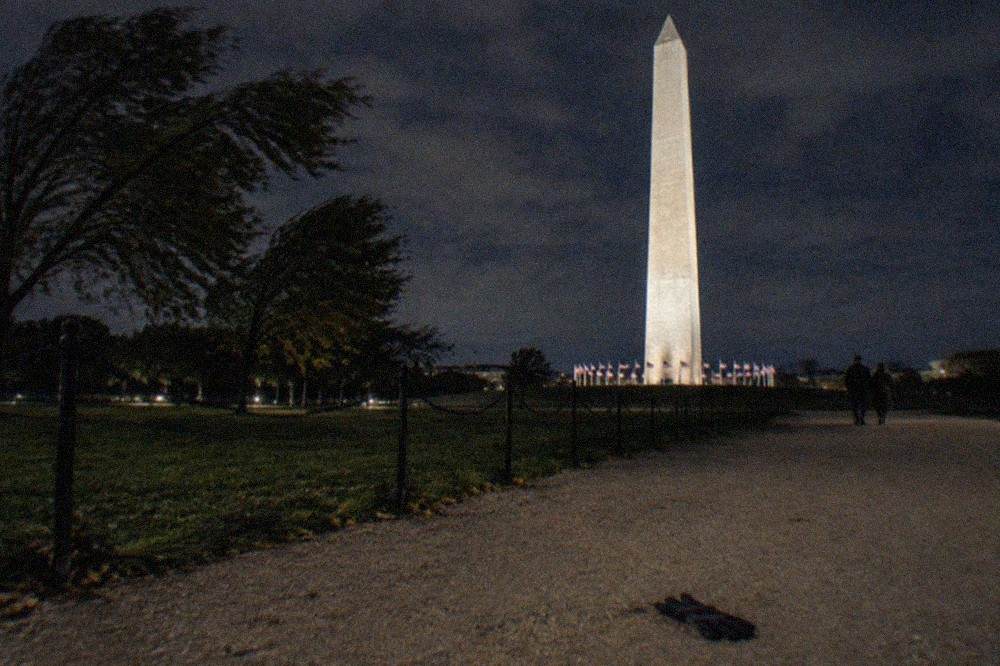
Two boundaries matter. First, ranger presence ends at 10 p.m.; the Park Service says rangers answer questions and run programs from 9:30 a.m. to 10 p.m., so a tour running later than that visits open but unstaffed ground. Second, the Washington Monument is a different animal entirely. Its interior, the elevator to the observation level, runs 9 a.m. to 5 p.m. on a timed-ticket system, and it is closed on Independence Day, Christmas, and one maintenance day each month. Every night tour on this roster views the monument illuminated from the grounds, which is honestly the better sight anyway: the obelisk lit against a dark sky is the postcard image, and no elevator is required to see it.
One more access detail from the park's compendium: East Potomac Park, the peninsula south of the memorials that holds Hains Point, closes to everyone daily from 1 a.m. to 5 a.m. The core Mall is unaffected. If your night ends on the memorial axis rather than down at the point, the 24-hour rule holds all night.
For a deeper look at the single most photographed stop on any night route, the companion page on the Lincoln Memorial after dark covers that memorial's lighting, angles, and crowd patterns in detail.
What Route Does A Monuments-By-Night Tour Actually Follow?
Most night tours trace the same core loop: the Capitol grounds or Union Station area in the east, west along the National Mall past the Washington Monument, then the WWII Memorial, the Reflecting Pool, and the Lincoln Memorial, with the Korean War and Vietnam Veterans Memorials tucked beside it. The format determines pace, not geography: trolleys and buses drive the loop, walking tours cover the western end on foot.
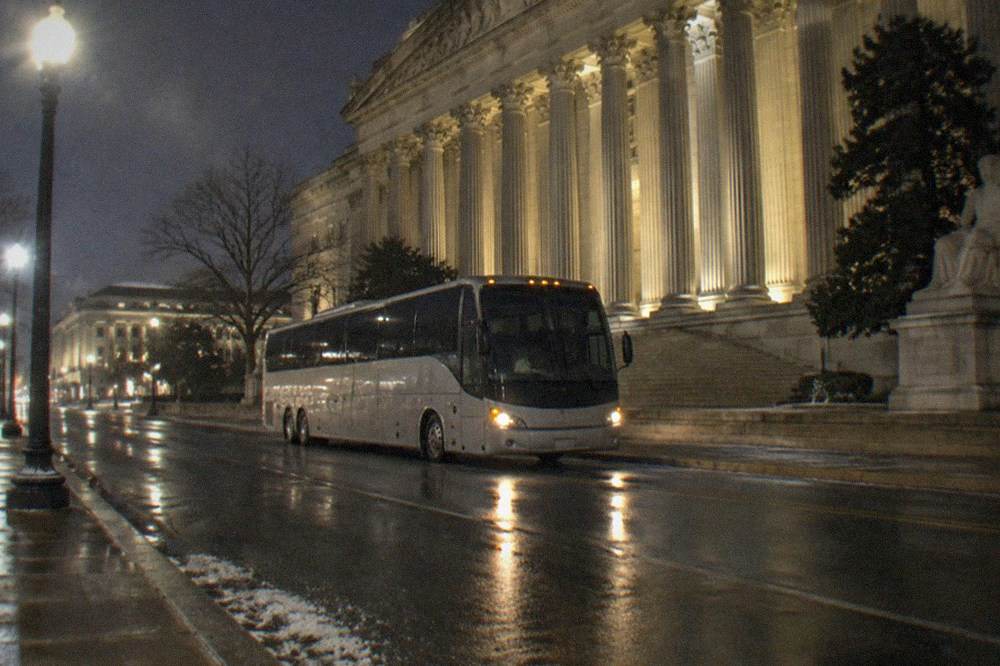
The "Dusk Bus Tour, National Mall" is a useful template for what the driven versions look like. It departs from 701 Pennsylvania Avenue NW, near the eastern edge of the core, and works west through the lit spine of the Mall. The "3-Hour Bus, Hotel Pickup" covers similar ground on a longer clock, and it is the only monuments-by-night product on the roster that collects guests from their hotels, meeting otherwise near the National Archives. The "Moonlight Trolley, 2 Hours 30 Minutes" departs from the Washington Welcome Center on E Street NW or Union Station and adds a stop across the Potomac at the Marine Corps War Memorial, the Iwo Jima statue, whose operator's listing notes that stop can be affected by bridge closures, so treat that segment as conditional.
The walking format trades range for depth. The "2-Hour Monuments Walking Tour" departs from the Gifts & Cafe on Henry Bacon Drive, right at the Lincoln Memorial end of the Reflecting Pool, and spends its two hours on the western cluster: Lincoln, the Vietnam Veterans Memorial wall, the Korean War Veterans Memorial, and the WWII Memorial, all within a mile of each other. Guests who want the Jefferson Memorial and the Tidal Basin in the same evening generally need wheels, because that loop adds more distance than a two-hour walk comfortably absorbs.
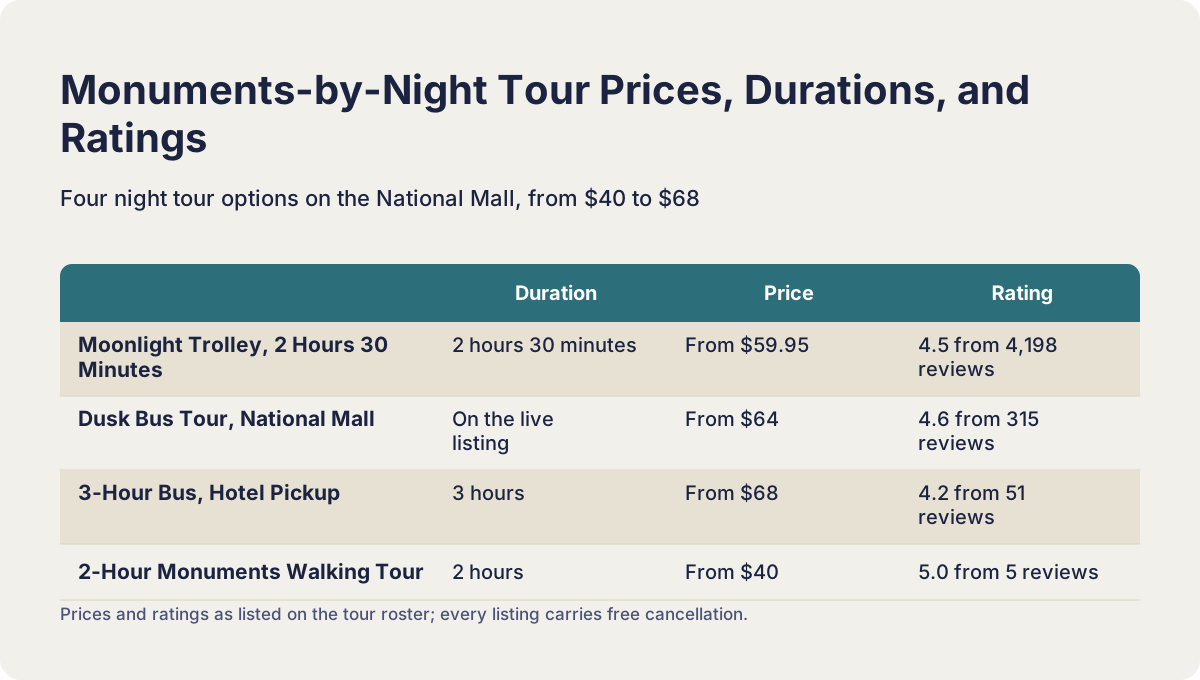
Here is how the four monuments-by-night formats on this roster compare:
| Tour (decision name) | Format | Duration | Price | Rating |
|---|---|---|---|---|
| Moonlight Trolley, 2 Hours 30 Minutes | Trolley loop with Iwo Jima stop | 2 hours 30 minutes | From $59.95 | 4.5 from 4,198 reviews |
| Dusk Bus Tour, National Mall | Bus loop from Penn Quarter | On the live listing | From $64 | 4.6 from 315 reviews |
| 3-Hour Bus, Hotel Pickup | Bus loop with hotel pickup | 3 hours | From $68 | 4.2 from 51 reviews |
| 2-Hour Monuments Walking Tour | On foot, western cluster | 2 hours | From $40 | 5.0 from 5 reviews, a small early pool |
Every one of those listings carries free cancellation, which matters in a city where evening plans compete with weather and long dinner reservations. Prices sit in a narrow band from $40 to $68, so the real choice is format and stamina, not budget.
Bus, Trolley, Or Walking: Which Night Format Fits?
Pick the trolley for the most-reviewed, narrated loop with the Iwo Jima add-on; pick a bus if you want hotel pickup or the longest coverage window; pick the walking tour if you want to stand still at each memorial rather than view it from a curb. Families with young children do better seated; photographers and repeat visitors do better on foot.
The trade-off is time at each stop. A driven tour gives you a set number of minutes at each memorial, enough for photos and a quick read of the inscriptions, then moves on. A walking tour gives you as long as the group's pace allows at a smaller set of sites. Neither is objectively better; they solve different problems. The trolley's 4,198-review track record makes it the safest default for a first visit, and its departure points at the Washington Welcome Center and Union Station sit on top of Metro lines, which removes the parking question entirely.
The walking tour deserves more attention than its small review pool suggests. It is the cheapest monuments-by-night product on the roster at $40, it holds a perfect 5.0 from its small early review count, and it is the only format that lets you hear the guides at conversational volume rather than over an engine. The Vietnam Veterans Memorial in particular rewards slowness; the wall's design only works when you walk its length, and a bus curbside view misses the point of it entirely.
The bus category is where the "3-Hour Bus, Hotel Pickup" earns its keep. Three hours is the longest window of any monuments-by-night product here, and hotel pickup removes the single most common failure mode of a DC evening: the Metro ride that eats forty minutes you had budgeted for the monuments. Its 4.2 from 51 reviews is the softest rating in the category, so read recent guest feedback on the live listing before booking, but the format itself fills a real gap.
What Else Sits Along The Mall After Dark?
Beyond the big-name memorials, the night Mall holds the Tidal Basin and Jefferson Memorial loop, the FDR and MLK Memorials, the Constitution Gardens lake, the Smithsonian castle's lit towers, and the Capitol's floodlit dome closing the eastern view. The eastern half, museums and all, is quieter and stranger at night: the buildings close, but their facades stay lit and the lawns stay open.
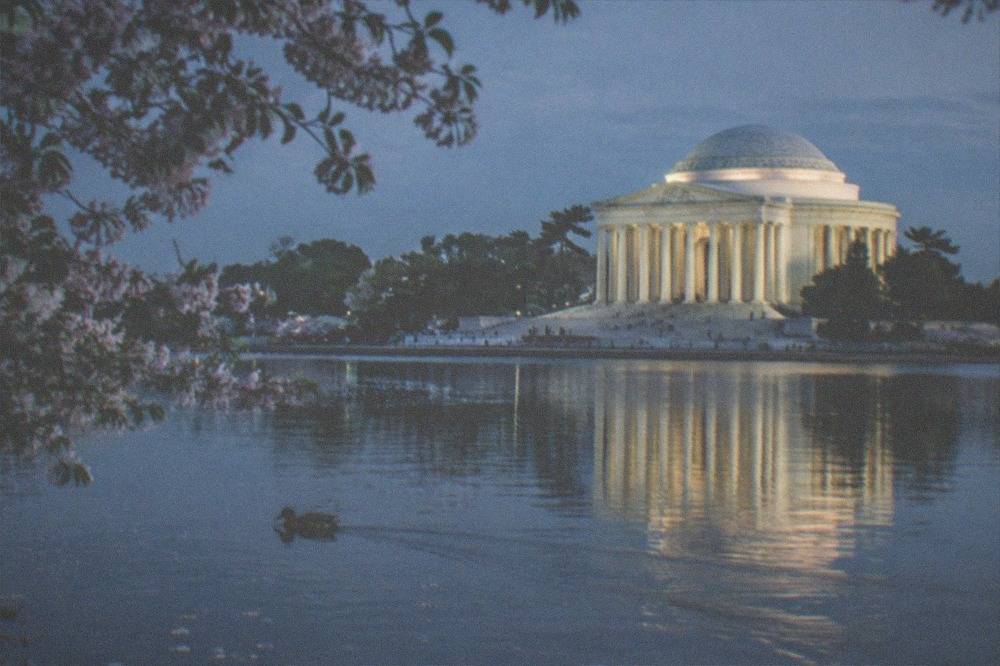
The Jefferson Memorial is the night Mall's secret weapon. Across the Tidal Basin from the western cluster, it reads almost empty after dark, and the water reflects its dome in a way the daytime crowd never lets you see. Tours that include it, mostly the driven formats, typically approach along the basin's rim road. The MLK Memorial sits on the basin's northwest corner and is one of the most dramatic night subjects on the whole Mall: the Stone of Hope figure emerges from the mountain carving under directional light, with the Jefferson visible across the water behind it.
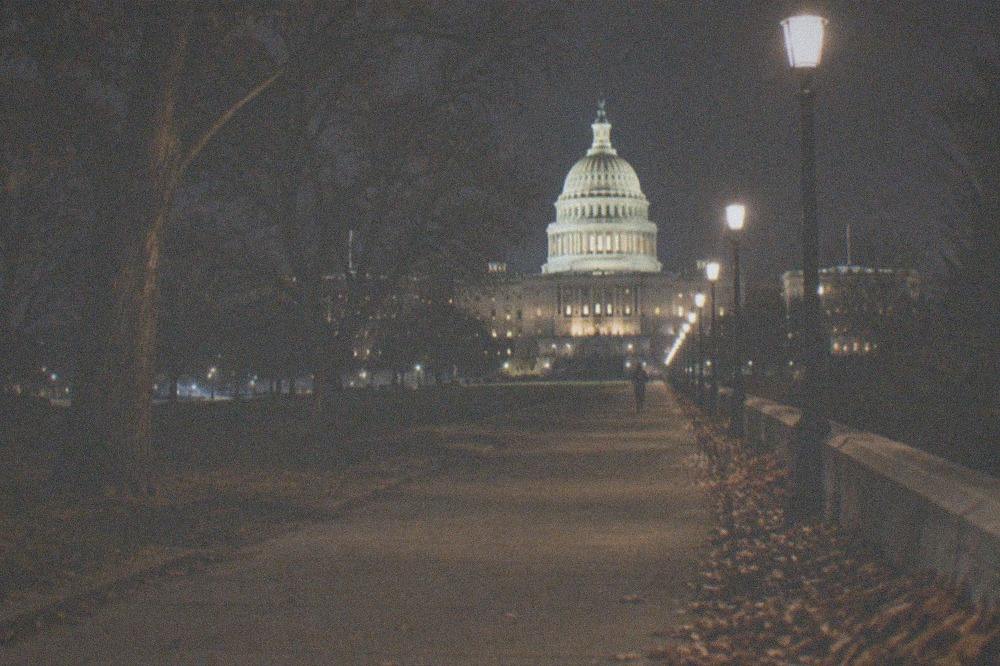
Constitution Gardens, the lake and woodlands between the Washington Monument and the Vietnam Veterans Memorial, is a quiet cut-through that most tours skip but independent walkers enjoy. And at the eastern end, the Capitol dome is lit all night, which is why so many tour routes frame their final stop against it. None of the Smithsonian museums stay open into the night on a regular schedule, so plan museum hours for the daytime and treat the evening as the outdoor chapter of the visit.
A reasonable independent walking plan, if you skip a tour, is to start at the eastern end near the Capitol after dinner, walk the Mall's spine west as the lights come up, and finish at the Lincoln Memorial an hour or so later. That route runs roughly two miles end to end and passes nearly every lit facade on the property. For a fuller menu of after-dark options beyond the Mall itself, including ghost walks and river cruises, see what you can do at night in DC.
When Do The Monuments Light Up, And When Is Best To Go?
The memorials are lit continuously through the night rather than switched on at a set hour, so there is no lighting schedule to chase. The practical sweet spot is the hour after full dark, when the sky still holds some blue and the crowds from the daytime have drained away. Summer pushes that window late, near 9 p.m.; in winter it arrives before 6 p.m.
The Park Service does not publish an on/off lighting schedule, and none is needed: standard exterior illumination of the major monuments runs all night. What changes through the evening is the sky and the crowd. The first hour after sunset gives the classic deep-blue backdrop that photographers chase, and the memorial terraces are noticeably emptier than at midday. By 10 p.m. the grounds are close to deserted, and rangers have gone off duty, so the experience becomes quieter and more self-guided. Other pages covering the same trip are gathered on Washington DC Night Tours.
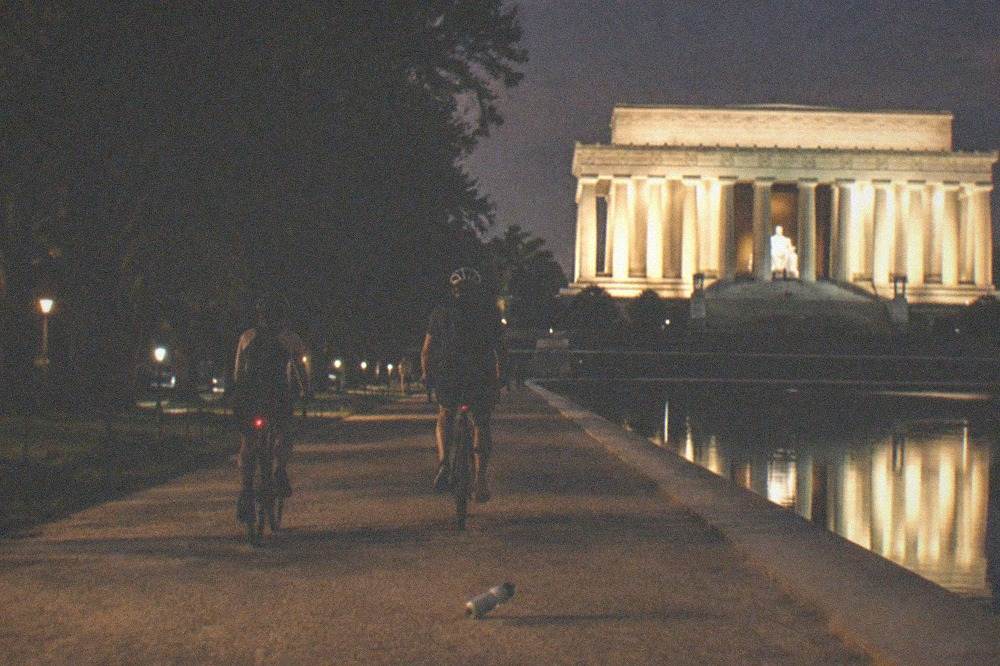
The "3-Hour Night Bike Tour" has built its popularity on exactly this window. It runs three hours from 701 D Street NW near the Navy Memorial, covers the lit core at cycling pace, and holds a 4.7 from 569 reviews, the largest review pool of any bike product on the roster. Riding the Mall after dark, with the streets empty and the monuments as waypoints, is a genuinely different experience from walking it, and the operator supplies the bikes and the route.
For the timing question in more depth, including seasonal light-up windows and the best months, the companion guide on the best time to see the monuments lit up breaks the calendar down month by month.
Is It Safe To Walk The Mall At Night?
Yes, by every official measure. The National Mall sits in Ward 2, described in 2026 reporting as one of the city's least violent areas, with shootings on the Mall characterized as rare. Neither the Park Service nor police prohibit night walking, the grounds stay patrolled around the clock by United States Park Police, and Destination DC notes the city's violent crime is at a 30-year low. Standard city-sense precautions still apply.
The park's own compendium imposes no night curfew on the core Mall, and Park Police patrol the property 24/7. A neighborhood analysis of police data scored the Monumental Core at 95 out of 100, low risk, with 17 incidents recorded over an eight-month span, and citywide reporting puts homicides down 30 percent year to date. The honest caveat is that MPD's general guidance still advises not traveling alone late at night, keeping phones stowed, and staying aware, and that is sensible anywhere, including here (see Worth It?).
The practical safety picture for a night visitor is less about crime and more about footing and distance. The Mall's walkways are lit but uneven in stretches near the Reflecting Pool work zones, the distances between memorials are longer than they look on a map, and the nearest open restrooms and water after 10 p.m. are scarce. Go with comfortable shoes, a charged phone, and a plan for getting back to your hotel that does not assume a rideshare will find you instantly at the Lincoln steps at midnight.
The companion guide on National Mall safety at night covers this in full, including the park's official guidance and the neighborhoods question. For the citywide picture, where to avoid in DC at night addresses the districts away from the Mall, which is where the caution actually belongs.
Planning Your Visit: Costs, Transport, And What To Bring
The Mall itself is free, open, and Metro-accessible at all hours; the costs are the tour ticket, from $40 to $68 for monuments formats, plus transport and food. Metro runs until midnight on weeknights and later on Fridays, parking is metered and time-limited in the core, and after-dark planning should assume limited open restrooms and food once you leave the Penn Quarter and Wharf edges.
Budgeting the evening is simple because the variable is one ticket. The walking tour starts at $40, the trolley at $59.95, the bus formats at $64 and $68, and every listing on the roster carries free cancellation. If the ticket itself is the obstacle, the free things to do in Washington DC at night guide covers the same core route with no ticket at all. Food along the Mall at night is the real constraint: the museum cafes close with the museums, and the nearest reliable late options cluster at the eastern Penn Quarter edge and at the Wharf to the southwest, both a Metro ride or a long walk from the western memorials. Eat before you go, or plan the meal as the bookend.
| Planning item | What to expect after dark |
|---|---|
| Grounds access | Open 24/7, no tickets for outdoor memorials |
| Ranger presence | Until 10 p.m. daily |
| Washington Monument interior | Separate 9 a.m. to 5 p.m. timed-ticket operation, never on a night tour |
| Metro | Runs to midnight weeknights, later on Fridays; stations at Smithsonian, Union Station, Foggy Bottom |
| Parking | Metered and time-limited in the core; garages near Union Station and the Wharf are the practical bet |
| Food and restrooms | Very limited on the Mall itself after dark; plan around Penn Quarter or the Wharf |
| Tour ticket range | From $40 to $68 for monuments-by-night formats, all with free cancellation |
Dress for standing around, not for walking fast: even summer nights on the Mall can turn breezy by the water, and the guides on the driven formats spend stretches stationary at stops. The site's guide on what to wear on a DC night tour covers seasonal layers in detail. If you are weighing a guided evening against doing it yourself, the honest answer is that the Mall's 24-hour access makes a self-guided night entirely workable, and a tour's value is the narration, the routing, and the guarantee you do not spend the evening staring at a map. The question of whether DC night tours are worth it gets a fuller treatment on the blog.
One planning note that first-time visitors consistently miss: the Mall's scale. End to end, Capitol to Lincoln Memorial, is roughly two miles, and the Tidal Basin loop adds another mile and a half. People who plan "an hour at the monuments" are planning for a fraction of what is there. A guided format solves that arithmetic for you; if you go alone, pick a cluster and do it properly rather than racing the whole axis. Here is how the main night-route clusters stack up for an independent walker:
| Night walking cluster | Key lit sights | Rough scale |
|---|---|---|
| Western cluster | Lincoln Memorial, Reflecting Pool, Vietnam Veterans Memorial, Korean War Veterans Memorial, WWII Memorial | About a mile end to end, the densest stretch |
| Monument core | Washington Monument grounds, Constitution Gardens, Smithsonian facades | Open lawns, longer distances between stops |
| Tidal Basin loop | Jefferson Memorial, FDR Memorial, MLK Memorial | Roughly a mile and a half around the water |
| Eastern end | Capitol dome view, Capitol grounds, Penn Quarter food edge | Best as the start or finish of a full-axis walk |
The Short Version
Go to the western cluster after full dark, start within an hour of sunset, and use the 24/7 access to stay past the crowds. If you book a tour, pick by stamina rather than budget because the price band is only $28 wide: the trolley is the proven default, the bus with hotel pickup is the logistics-free option, and the walking tour lets the memorials breathe.
The National Mall at night is one of the few world-class sights that costs nothing, closes never, and rewards the smallest amount of planning. Whether you take the "Dusk Bus Tour, National Mall" with its 4.6 from 315 reviews, ride the trolley that anchors this site's roster, or simply walk out to the Lincoln steps on your own after dinner, the underlying facts are on your side: open grounds, continuous lighting, and a park that was designed to be looked at long after the museums go dark.
Common Questions About The National Mall At Night
Is The National Mall Open 24 Hours?
Yes. The National Park Service states the public may visit the sites of National Mall and Memorial Parks 24 hours per day, and no outdoor memorial on the core Mall locks its gates at night. The only standing night closure on the property is East Potomac Park, which shuts to vehicles, pedestrians, and bicycles from 1 a.m. to 5 a.m. daily.
What's The Best Way To See The Monuments In DC?
After dark, the choice is between a driven loop and a walking tour. The trolley covers the most ground with the longest track record, the bus formats add hotel pickup or a longer window, and the walking tour spends its full two hours on the western cluster around the Lincoln Memorial. All four monuments-by-night formats run from $40 to $68 with free cancellation.
Are Rangers On Duty At Night?
Rangers staff the memorial sites from 9:30 a.m. to 10 p.m. daily. After 10 p.m. the grounds stay open and lit but unstaffed, patrolled instead by United States Park Police around the clock. Any tour running past 10 p.m. is visiting open ground without ranger interpretation.
Can You Go Inside The Washington Monument At Night?
No. The monument's interior operates on a separate 9 a.m. to 5 p.m. timed-ticket schedule and is closed on Independence Day, Christmas, and one maintenance day per month. Night tours view the monument illuminated from the grounds, which is the classic image of it anyway.
Is It Safe To Walk The National Mall At Night?
Yes. The Mall sits in one of the city's least violent areas, Park Police patrol 24/7, and no official source prohibits night walking. Standard precautions apply: travel with a companion late at night, keep your phone stowed, and mind uneven walkways near the Reflecting Pool work zones.
How Much Does A National Mall Night Tour Cost?
The four monuments-by-night formats on this roster run from $40 for the two-hour walking tour to $68 for the three-hour bus tour with hotel pickup, with the trolley at $59.95 and the dusk bus at $64 in between. Every listing carries free cancellation, and the Mall's outdoor grounds themselves are free at any hour.