Is The National Mall Safe At Night?
The National Mall stays open, lit and patrolled around the clock, and the crime data for the surrounding area is among the most favorable in the city. Here is what the official sources actually say, and where a guided night tour fits in.
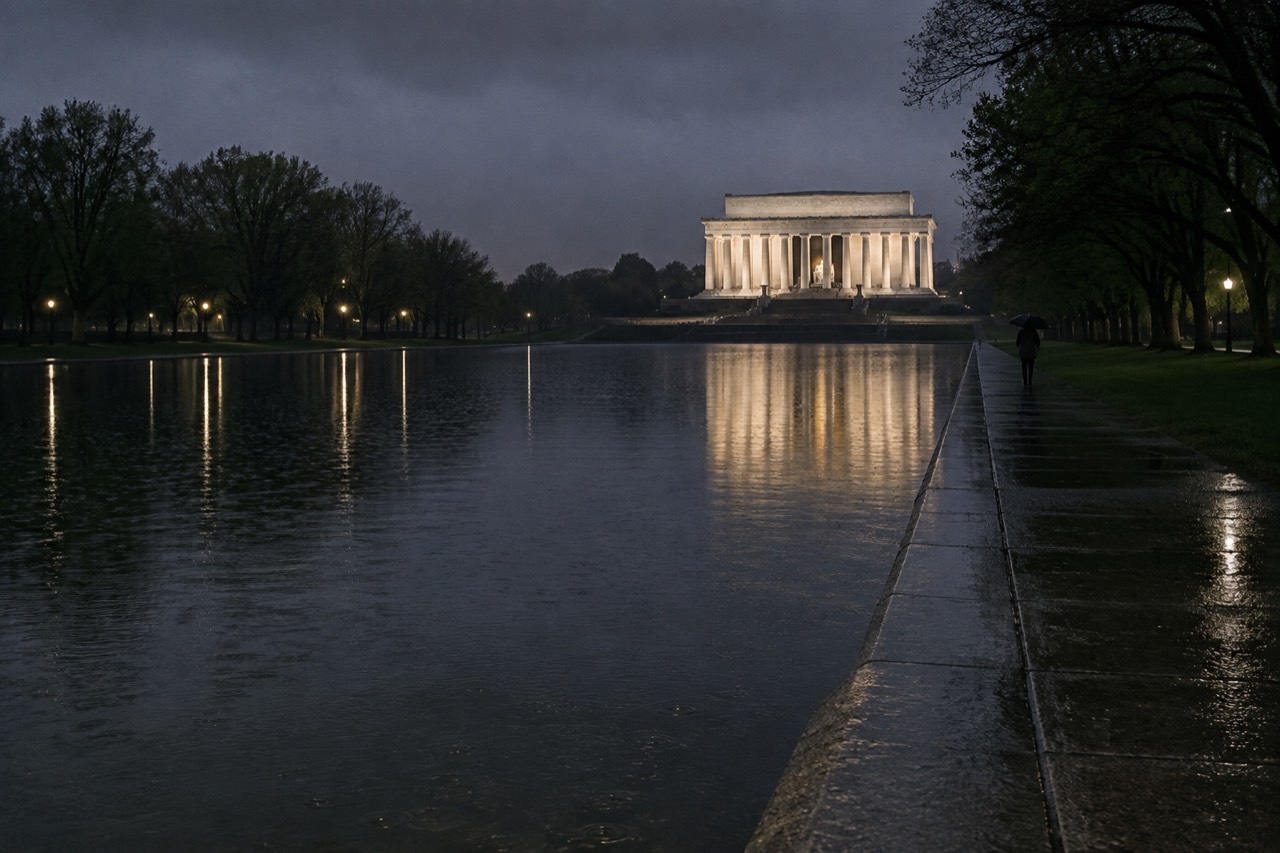
Short answer
Yes. The National Mall's outdoor grounds are open 24 hours a day, monuments are lit at night, and United States Park Police patrol around the clock. Ward 2, which contains the Mall, records among the lowest violent crime in DC, and the area scores 95 out of 100 on one neighborhood safety index.
Yes, and the honest answer comes with receipts. The National Park Service keeps the Mall's outdoor grounds open 24 hours a day, the memorials are illuminated after dark, and United States Park Police patrol the park around the clock rather than clocking out at sunset. The crime picture for the surrounding area, drawn from MPD data and city reporting, is one of the strongest in Washington. That does not mean the space is risk-free at 1 a.m., and it does not mean every corner of the wider city shares the Mall's profile. This guide separates what the official sources actually say from the folklore, then looks at where a guided option such as the "Moonlight Trolley, 2 Hours 30 Minutes" genuinely reduces friction for a first-time visitor.
Is The National Mall Safe At Night?
Yes, the National Mall is safe at night by any reasonable urban standard, and the official record supports that plainly. The park's outdoor areas are open 24 hours a day per the National Park Service, monuments are lit after dark, and Park Police patrol continuously. The surrounding Ward 2 records among the least violent crime in DC, and one safety analysis scored the Monumental Core 95 out of 100. The honest caveats involve distance, timing and common sense, not danger.
The question usually arrives at a specific moment: someone has seen photographs of the Lincoln Memorial glowing over the Reflecting Pool and wants that experience, but a spouse or a parent has raised an objection (see Lincoln At Night). The good news is that the objection can be answered with primary sources rather than reassurance.
Start with access. The National Park Service states that the public may visit the sites of National Mall and Memorial Parks 24 hours per day. There is no lockup, no gate, no closing time for the outdoor grounds of the Lincoln Memorial, the Jefferson Memorial, the Martin Luther King Jr. Memorial, the WWII Memorial or the Vietnam Veterans Memorial. Night tours exist as a commercial category precisely because this access is unconditional.
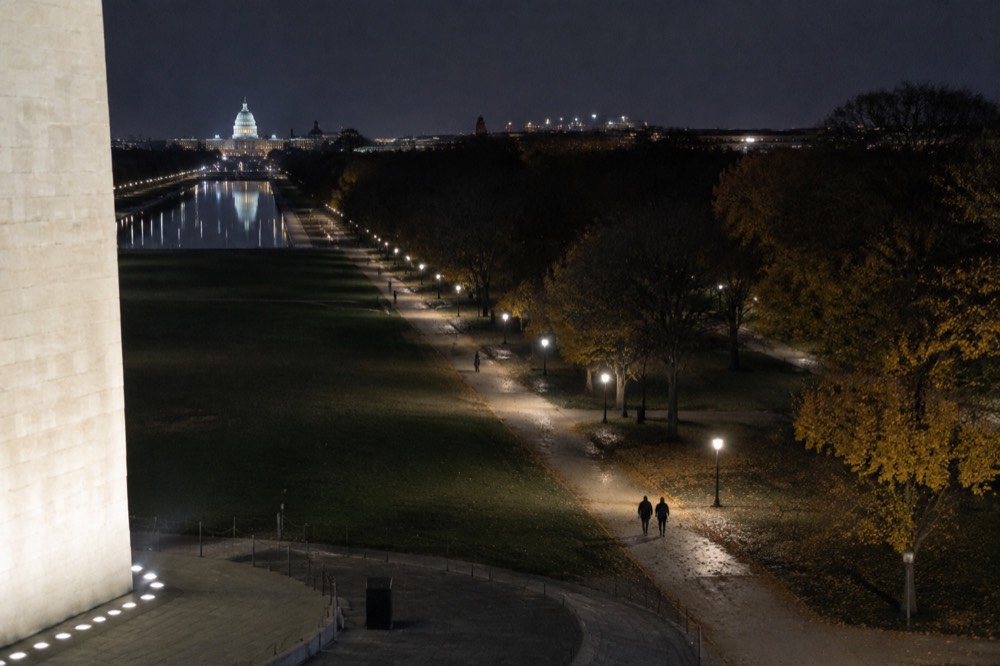
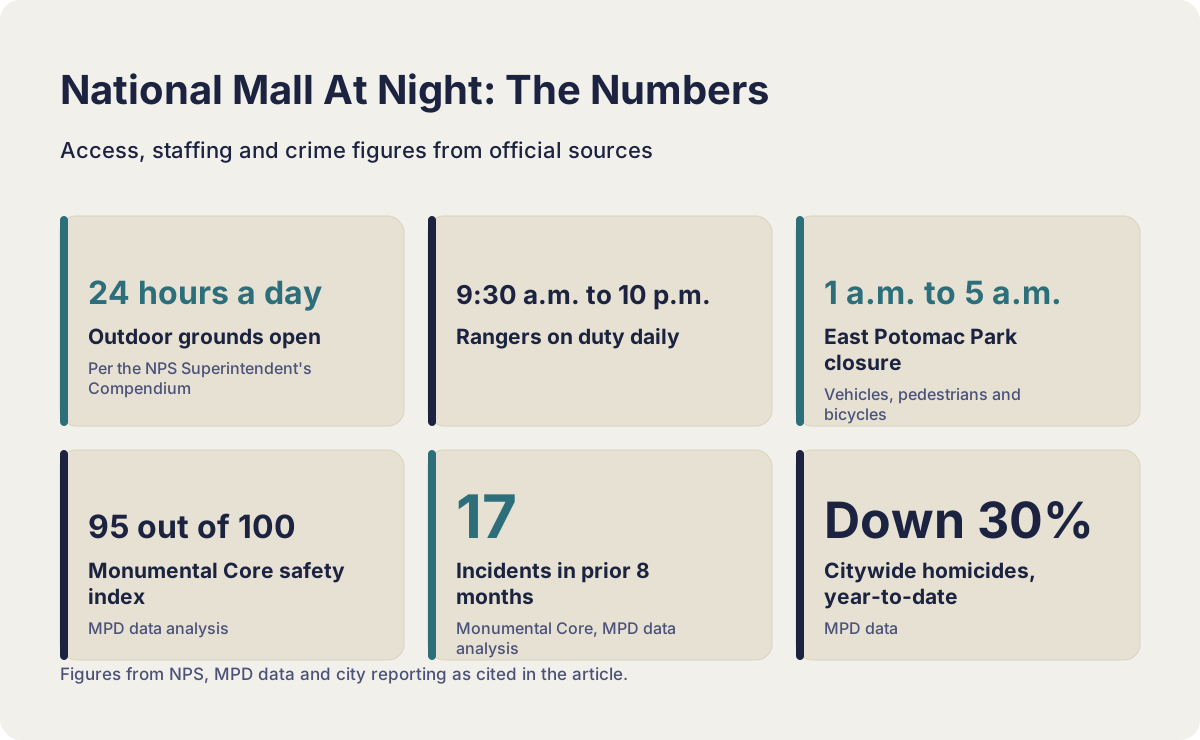
Then the safety layer. Rangers are on duty to answer questions from 9:30 a.m. to 10 p.m. daily, so an 8 p.m. visit still has interpretive staff around, but a midnight walk does not. What continues past 10 p.m. is the United States Park Police, which patrols the park 24/7. Unstaffed is not the same as unwatched, and it is certainly not the same as closed.
For a fuller picture of what the Mall is like after dark generally, including lighting and crowd behavior, the National Mall at night guide covers the experience itself, while this page stays on the safety question.
What Do The Official Sources Say About Night Access?
The National Park Service's Superintendent's Compendium for National Mall and Memorial Parks states that outdoor areas are open 24 hours a day, 7 days a week unless otherwise posted. The only standing night closure it records is East Potomac Park, shut to vehicles, pedestrians and bicycles daily from 1 a.m. to 5 a.m. No rule prohibits walking the main Mall after dark, and no official source recommends against it.
This matters because safety advice that cannot be traced to a source is just vibes. The compendium is the park's actual rulebook, and its silence on any general night restriction is meaningful: if the agency that manages the space saw night visitation as a problem, the compendium is where it would say so. You can read the document yourself at the NPS Superintendent's Compendium page.
The one exception deserves its own sentence. East Potomac Park, the strip of green between the Washington Channel and the Potomac that holds Hains Point, closes to everyone from 1 a.m. to 5 a.m. every day. That is a traffic and policing measure for an isolated loop road, not a comment on the memorial core, but a night cyclist planning a lap should know about it.
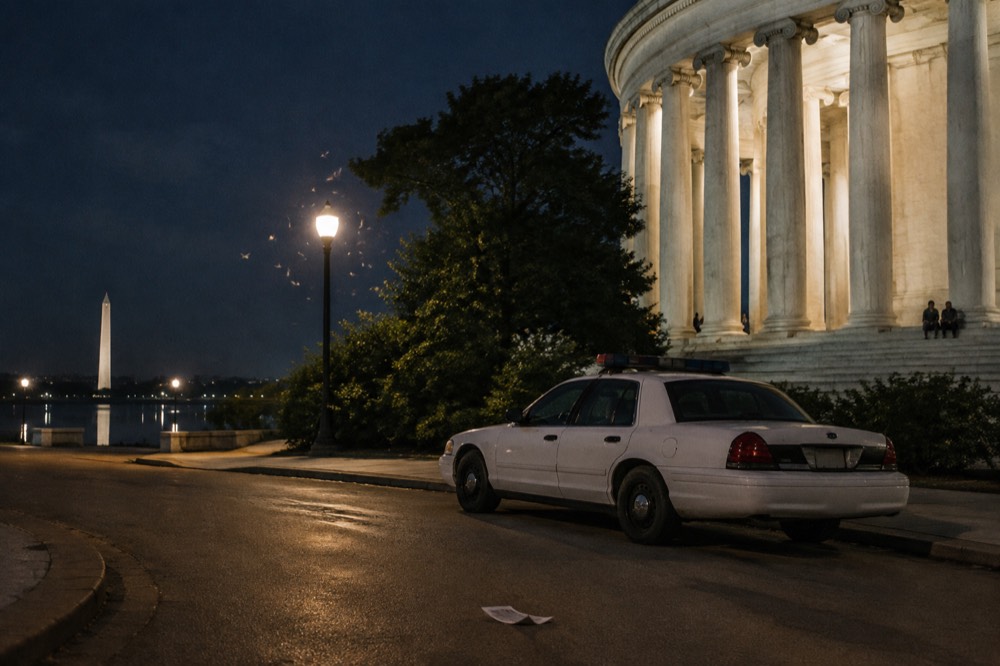
Destination DC, the city's tourism body, publishes MPD's general guidance alongside its safety information: don't travel alone late at night, stay aware of your surroundings, put phones and headphones away, and report anything suspicious. Note what that guidance is and is not. It is citywide, addressed to all neighborhoods at all hours. It is not a warning about the Mall specifically, and the same page notes that violent crime in DC is at a 30-year low.
| Official source | What it says | Applies to |
|---|---|---|
| NPS Superintendent's Compendium | Outdoor areas open 24/7 unless posted | All National Mall and Memorial Parks |
| NPS Hours page | Rangers on duty 9:30 a.m. to 10 p.m. daily | Interpretive staffing only |
| NPS Compendium, closure clause | East Potomac Park closed 1 a.m. to 5 a.m. daily | Vehicles, pedestrians, bicycles |
| Destination DC / MPD guidance | Don't travel alone late at night; stay alert | Citywide, all neighborhoods |
The pattern across every official document is the same: the Mall is open, lit and patrolled, and the advice attached to it is ordinary urban common sense rather than alarm.
What Does The Crime Data Show For The Mall Area?
The data is strongly favorable. Ward 2, which contains the National Mall, was reported by the New York Times as recording the second-fewest gun-related violent crimes in the city over the prior year, with all crime types down year-to-date. One neighborhood safety analysis scored the Monumental Core 95 out of 100, counting 17 incidents across the prior 8 months. Shootings on the Mall are characterized as rare.
That Ward 2 figure comes from May 2026 reporting on the district's crime picture, and it lines up with how the area behaves in practice: the Mall after dark is populated by tour groups, photographers, joggers and Park Police, not empty. The Monumental Core score comes from an independent analysis using MPD data, and while any index has methodological limits, 17 incidents in 8 months for an area that receives millions of visits is a very small number.
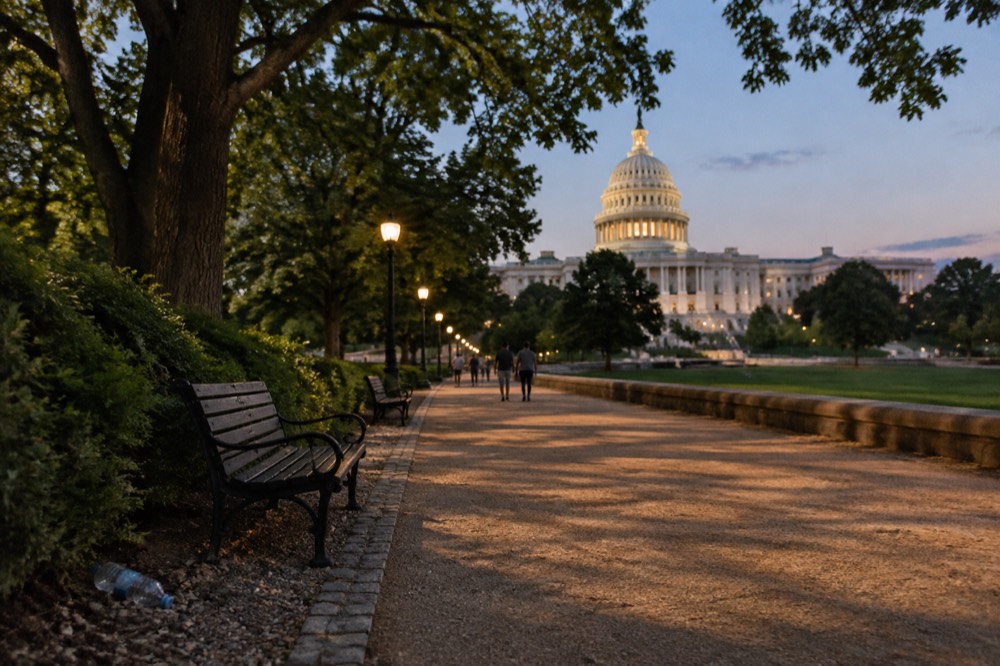
Citywide context is worth one honest paragraph. MPD's own data shows mixed trends: overall violent crime up 9% year-to-date, driven largely by assaults with a dangerous weapon, while homicides are down 30%, robbery is down 7% and property crime is down 18%. Those citywide figures include neighborhoods far from the Mall, and no official source publishes a Mall-only breakdown. The fair reading is that DC is a big city with a full range of neighborhoods, and the tourist core sits at the favorable end of that range. For the neighborhoods where late-night caution genuinely is warranted, the where to avoid in DC at night breakdown covers the citywide picture, which is a different question from the Mall itself.
| Indicator | Figure | Source basis |
|---|---|---|
| Monumental Core safety index | 95 out of 100 | MPD data analysis |
| Incidents in Monumental Core, prior 8 months | 17 | MPD data analysis |
| Ward 2 gun-related violent crime | Second-fewest of any ward | New York Times reporting |
| Citywide homicides, year-to-date change | Down 30% | MPD data |
| Citywide robbery, year-to-date change | Down 7% | MPD data |
| Citywide property crime, year-to-date change | Down 18% | MPD data |
None of this makes the Mall a theme park. It makes it a well-lit national park in the middle of a city whose tourist core is measurably its safest zone, which is the accurate frame for the decision you are actually making.
When Is Ranger Staffing A Factor?
Rangers are on duty from 9:30 a.m. to 10 p.m. daily, so any evening visit before 10 p.m. has interpretive staff present at the memorials. After 10 p.m. the grounds stay open and lit, but they are unstaffed for interpretation, with Park Police providing the ongoing presence. A tour that runs past 10 p.m. should not be expected to include ranger interaction unless its own listing promises it.
This is the distinction that trips up a lot of copy elsewhere. Some articles imply the monuments are "staffed all night," which is not what the NPS hours page says. Others imply the Mall closes when the rangers leave, which is equally wrong. The accurate version has two layers: interpretation ends at 10 p.m., access never ends.
For planning, the practical takeaway is that the sweet spot for a self-guided evening walk is roughly 8 p.m. to 10 p.m. in summer: the monuments are fully lit, the daytime crowds have thinned, rangers are still around, and the Metro is running frequent service. Later than that, the space gets quieter and the experience shifts from lively to solitary, which some photographers want and some first-time visitors do not.
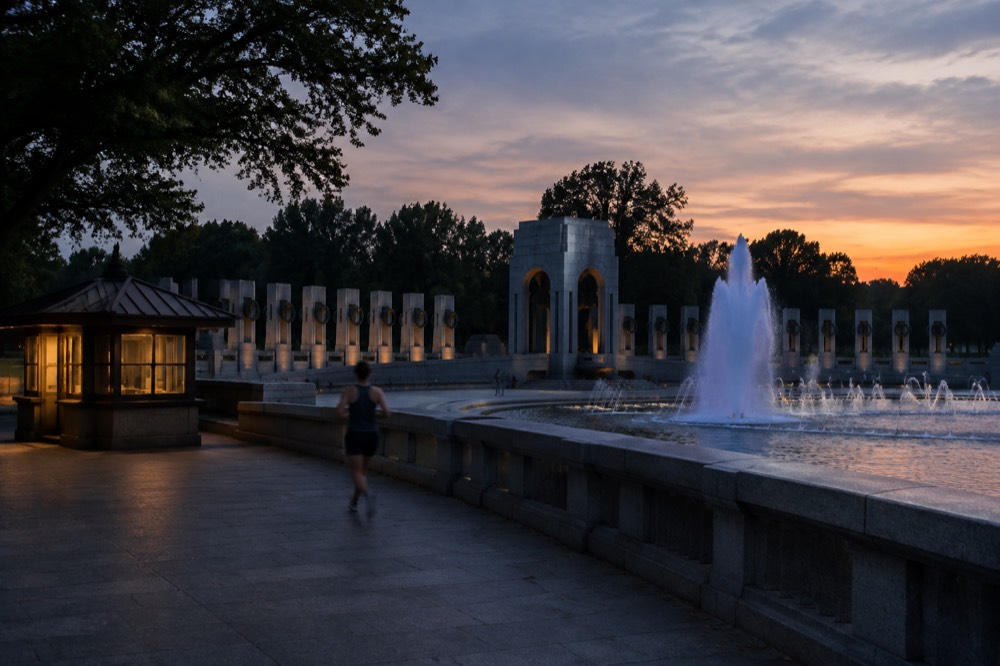
A guided product handles the timing question for you. The "Moonlight Trolley, 2 Hours 30 Minutes" runs its loop in the evening hours with a guide narrating throughout, from $59.95, and it carries a 4.5 rating across 4,198 reviews, the largest review pool of any night product on this site's roster. It departs from the Washington Welcome Center at 1001 E St NW or from Union Station. The "Dusk Bus Tour, National Mall" covers similar ground from $64 with a 4.6 rating across 315 reviews, departing from 701 Pennsylvania Avenue NW. Both are structured around the lit-monument window rather than the small hours, which is exactly when the staffing and lighting conditions are at their best.
What Common-Sense Practices Apply After Dark?
The practices are the ones MPD publishes for the whole city: avoid walking alone late at night, keep phones and headphones stowed, stay aware of your surroundings, and report suspicious activity. On the Mall specifically, add practical layers: know your Metro return time, wear real walking shoes, carry water, and keep to the lit memorial core rather than cutting through dark grass medians. None of this is Mall-specific alarm, it is ordinary urban literacy.
The distance question surprises people more than the safety question does. The Mall is long: the walk from the Capitol to the Lincoln Memorial is roughly two miles one way, and a route that adds the Tidal Basin memorials can stretch well beyond that. At night, with fewer people around and cooler temperatures, fatigue sets in differently than on a shaded afternoon stroll. Planning the return leg before you start matters more than any security consideration.
| Situation | Reasonable planning allowance |
|---|---|
| Self-guided evening walk | 2 to 3 hours for the core memorials, at a relaxed pace |
| Water | One bottle per person; few fill points after dark |
| Footwear | Broken-in walking shoes; the Mall is concrete and gravel |
| Metro return | Check last train times before you set out |
| Phone | Charged and stowed, not in hand while walking |
| Group size | Two or more after 10 p.m., per MPD's citywide guidance |
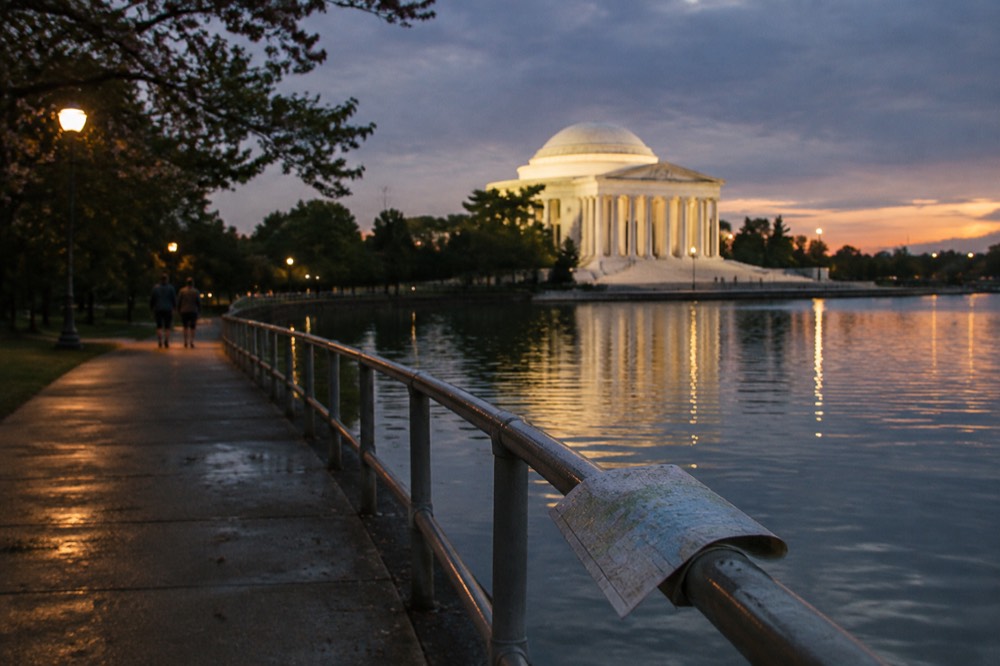
Lighting deserves a specific note. The monuments themselves are illuminated, and the main walkways are lit, but the spaces between memorials, the grass medians and the riverfront edges are dimmer than a visitor expects. Staying on the paved paths is both the safer and the more scenic choice, since that is where the sightlines and the lighting were designed to be.
The National Park Service maintains its own hours and conditions information at the NPS National Mall hours page, and checking it before an evening visit is the habit worth building, because construction and event closures change the walking routes more often than anything else does.
Why Does A Guided Night Tour Lower The Friction?
A guided tour converts an unfamiliar, dark, two-mile park into a staffed, scheduled, narrated experience: you arrive at a known departure point, travel with a group and a guide, and finish at a set time near transit. For a first-time or solo visitor, that removes the three genuine friction points of a night visit, navigation, timing and company, without changing the underlying safety picture, which is already good.
This is the honest version of the pitch, and it is worth being precise about. A guide does not make the Mall safer in a statistical sense, the Mall's numbers are the Mall's numbers. What a guide changes is your margin for error. You are not alone at 10:30 p.m. trying to recall which Metro station is closest to the Jefferson Memorial. You are on a loop with a driver, a narrator and a dozen other visitors, and the logistics are somebody else's job.
The roster offers that structure in several formats. The "2-Hour Monuments Walking Tour" is the cheapest monuments-by-night product at from $40, a pure walking format departing from the Gifts & Cafe on Henry Bacon Dr NW, carrying a perfect 5.0 from its small early review count. The "3-Hour Bus, Hotel Pickup" option at from $68 is the only monuments-by-night product with hotel pickup, which removes even the departure-point question. And for visitors whose evening interest runs spookier than solemn, the "Exorcist Steps Ghost Walk" runs 1 hour 30 minutes through Georgetown from $49, with a 4.8 rating across 779 reviews, the most-reviewed walking ghost tour on the roster.
Every listing on this site's roster carries free cancellation, so the commitment level of booking a guided evening is low. The site's own Washington DC Night Tours collection exists precisely to make this comparison easy.
Does The Mall's Safety Change By Season Or Event?
The Mall's baseline does not change by season, but event overlays do. Large gatherings such as July 4 bring designated security, fencing and screening that temporarily reshape access, and construction projects periodically close specific walkways, as the Reflecting Pool area and a WWII Memorial modernization project did during 2026. The 24-hour access rule itself has never been suspended for ordinary evenings.
Event security is worth understanding correctly. When a National Special Security Event designation applies, as it did for the America's 250th July 4 celebration, screening, fencing and identification requirements appear for that event window, and some areas close for parts of the day. That is event-specific and announced in advance, not a standing night rule. An ordinary Tuesday evening in October looks like the baseline: open, lit, patrolled.
Construction is the more common disruptor, and it is mundane rather than scary. Repair and modernization projects on the Mall periodically reroute pedestrians, close a walkway or shift a viewing angle, and the NPS conditions page is where those are posted. A guided tour handles even this quietly, since operators adjust their routes and narrate around the fences, while a self-guided visitor with a two-year-old blog post in hand can walk into a detour.
Seasonally, the practical differences are daylight and temperature. Summer gives you lit monuments against a late sunset, with the busiest tour windows from dusk onward. Winter flips the schedule: darkness arrives early enough that a 6 p.m. start already has full lighting, and the cold thins the casual crowds dramatically. Neither season changes the safety fundamentals.
What Should A Solo Or First-Time Visitor Actually Do?
For a first evening, pick a guided or semi-structured option, or walk the core loop before 10 p.m. with a planned return route. The core loop from the Washington Monument to the Lincoln Memorial and back is the best-lit, most-trafficked, most-policed stretch of the park. Save the Tidal Basin and the farther memorials for a second visit or a tour that covers them by vehicle.
Solo travel specifically: MPD's citywide guidance says don't travel alone late at night, and the honest way to honor that on the Mall is to either keep your walk in the staffed, pre-10 p.m. window or attach yourself to a group. A guided tour is the cleanest version of that. The "Dusk Bus Tour, National Mall" at from $64 with a 4.6 rating across 315 reviews is a seated format that suits a solo visitor who would rather not navigate at all, and its departure point at 701 Pennsylvania Avenue NW sits close to Metro.
First-time visitors should also resist the urge to see everything in one night. The Mall rewards repetition: one evening for the core, one for the Tidal Basin, one for Georgetown or the Wharf. The site's broader coverage can sequence that, starting with the best way to see the monuments at night comparison of formats.
The one thing not to do is treat the Mall's safety as a reason to skip it at night. The illuminated memorials are arguably the city's signature experience, the access is unconditional, and the data behind the area's safety record is public. Go, and go informed.
Common Questions About The National Mall At Night
Is National Mall Safe At Night?
Yes. The outdoor grounds are open 24 hours a day, the monuments are lit after dark, and Park Police patrol around the clock. Ward 2, which contains the Mall, records among the least violent crime in DC, and one MPD-based analysis scored the Monumental Core 95 out of 100. Ordinary urban common sense still applies, especially after 10 p.m. when ranger staffing ends.
Is The National Mall Open 24 Hours?
Yes, the outdoor memorial grounds are open to the public 24 hours a day, 7 days a week per the National Park Service. The one standing night closure is East Potomac Park, closed to vehicles, pedestrians and bicycles from 1 a.m. to 5 a.m. daily. The Washington Monument's interior is a separate site with a 9 a.m. to 5 p.m. window and timed tickets.
Are There Rangers At The Memorials At Night?
Rangers are on duty from 9:30 a.m. to 10 p.m. daily. After 10 p.m. the grounds remain open and lit, but interpretive staffing has ended for the day. Park Police continue patrolling around the clock, so unstaffed does not mean unwatched.
Is It Safe To Walk The National Mall Alone?
Before 10 p.m., the core loop is well lit, well trafficked and regularly patrolled, and many people walk it alone. After 10 p.m., MPD's citywide guidance about not traveling alone late at night becomes more relevant. A guided night tour is the lower-friction option for a solo visitor who wants the late experience.
What Is The Safest Way To See The Monuments At Night?
Any of the well-reviewed guided formats keep you in a group on a scheduled route: the Moonlight Trolley from $59.95 with a 4.5 rating across 4,198 reviews, the Dusk Bus Tour from $64, or the 2-hour walking tour from $40. Self-guided is also reasonable if you keep to the lit core loop before 10 p.m. and plan your return transit.
Does The National Mall Close For Events Or Construction?
Large events such as July 4 can bring temporary fencing, screening and partial closures for the event window, announced in advance. Construction projects periodically close specific walkways, as the Reflecting Pool area repairs did during 2026. The 24-hour access rule itself stays in force on ordinary evenings, and current conditions are posted on the NPS conditions page.