Best Time To See The Monuments Lit Up At Night
The National Mall's memorials never close and never go dark, so the question is not whether you can see them lit up at night, it is when they look their best and when the crowds thin out. The answer sits at the intersection of official park hours, sunset timing, and tour departure schedules.
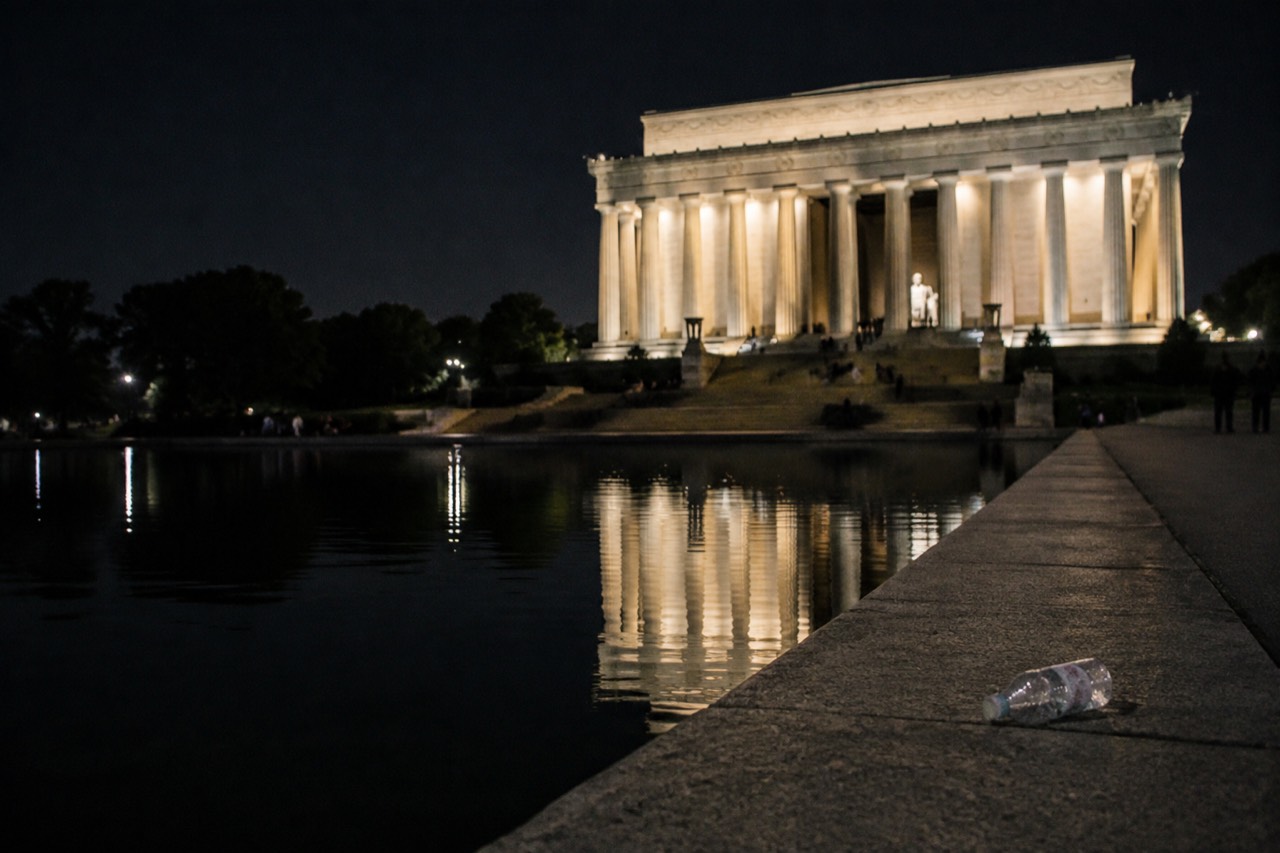
Short answer
The monuments are lit and open 24 hours a day, but the best window is the two hours after full darkness, roughly 90 minutes to 3 hours past sunset. Rangers stay on duty until 10 p.m., crowds peak at 8 p.m. and fade after 9, and the Moonlight Trolley at $59.95 covers the most ground in that window.
The National Park Service puts it plainly: the public may visit the sites of National Mall and Memorial Parks 24 hours per day. That single sentence is the whole reason the nighttime monument category exists. The Lincoln Memorial's columns, the Jefferson Memorial's rotunda, the WWII Memorial's fountains, all of them stay lit after dark, every night of the year, with no gate to close and no ticket to buy for the grounds. What changes through the evening is the light itself, the crowd density, and whether anyone in a ranger uniform is still around to answer questions. Get those three variables right and the same monuments that feel like a scrum at 8 p.m. feel like a private viewing at 10.
This page answers the timing question in full: when the lights look best, when the crowds fade, what the official hours actually are, and which of the bookable night tours fits each window. The figures come from the National Park Service's own hours pages and from the tour listings themselves, and where a number is not published, it says so rather than guessing.
When Do The DC Monuments Actually Get Lit Up?
The monuments are illuminated continuously once darkness falls, not switched on at a posted hour, because the National Mall grounds never close. There is no official lighting schedule published by the Park Service, no on-time or off-time to plan around. In practice the memorials read as fully lit from the end of civil twilight onward, which in Washington means roughly 45 to 75 minutes after sunset depending on season.
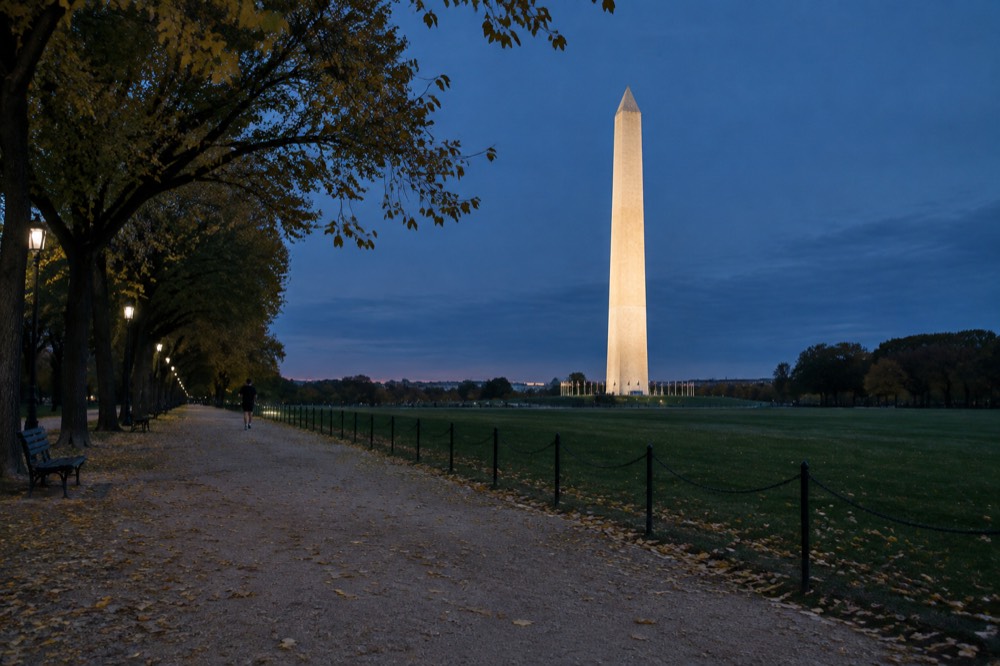
The Park Service's hours page for National Mall and Memorial Parks confirms the 24-hour access and notes that rangers are on duty from 9:30 a.m. to 10:00 p.m. daily to answer questions and run interpretive programs. Nowhere does the agency publish a lighting schedule, and search as you might, none exists in official sources. The lights are simply part of how the memorials operate. That matters for planning in one specific way: you cannot arrive too late for the lights. A visitor at midnight sees the same illuminated Lincoln that a visitor sees at 9:15.
What does shift is the quality of the light around the monuments. Photographers and repeat visitors tend to prize the window when the sky still holds some blue rather than going fully black, because the illuminated white stone reads richer against a gradient than against a void. That window is short in June and long in October. In midsummer the sky drops from blue to black in under an hour after sunset; in mid-fall it lingers. If the sky itself is part of what you want, the shoulder seasons give you more of it per evening.
One honest caveat: the lights are on, but the water features are not always running. The WWII Memorial underwent a fountain and lighting modernization project that began around January 2026 and was expected to wrap up by mid-May of that year, with temporary partial closures and adjusted pedestrian routes during the work. If a working fountain matters to your visit, the Park Service's current conditions page is the place to check before you go, since construction schedules shift and the page carries the authoritative word.
For everything else about the after-dark category, the deeper rundown lives in the monuments by night tours guide, which covers the full tour field, format by format.
What Time Of Evening Do The Monuments Look Their Best?
The sweet spot is the two hours after full darkness, which lands roughly 90 minutes to 3 hours past sunset in every season. In that window the lights are fully on, the sky still holds color early in it, the daytime heat has broken in summer, and the biggest crowds of the evening have not yet peaked or are already starting to drain. Aim to be standing at your first memorial about an hour after sunset.
Think of the evening in three phases. Phase one is sunset to full dark: the sky is doing the interesting work, but the monument lights are competing with it and the stones read as gray rather than glowing. Phase two is the hour after full darkness: the lights win, the sky is a deep blue fading to black, and this is the postcard window. Phase three is late evening, from about 9:30 onward: the sky is gone, the lights are the only show, and the crowds thin dramatically. All three phases are worth seeing; they reward different priorities.
Crowd behavior is the other half of the timing question. The memorial core is a busy place at 8 p.m. in any tourist season, with school groups, tour buses offloading, and families finishing dinner and heading to the Mall. By 9:30 the buses have largely pulled out, and by 10 the difference is striking. The Park Service's own staffing reflects the same rhythm: rangers wrap up at 10 p.m., which is roughly when the evening's mass visitation does too. The grounds stay open and lit after that, just quieter.
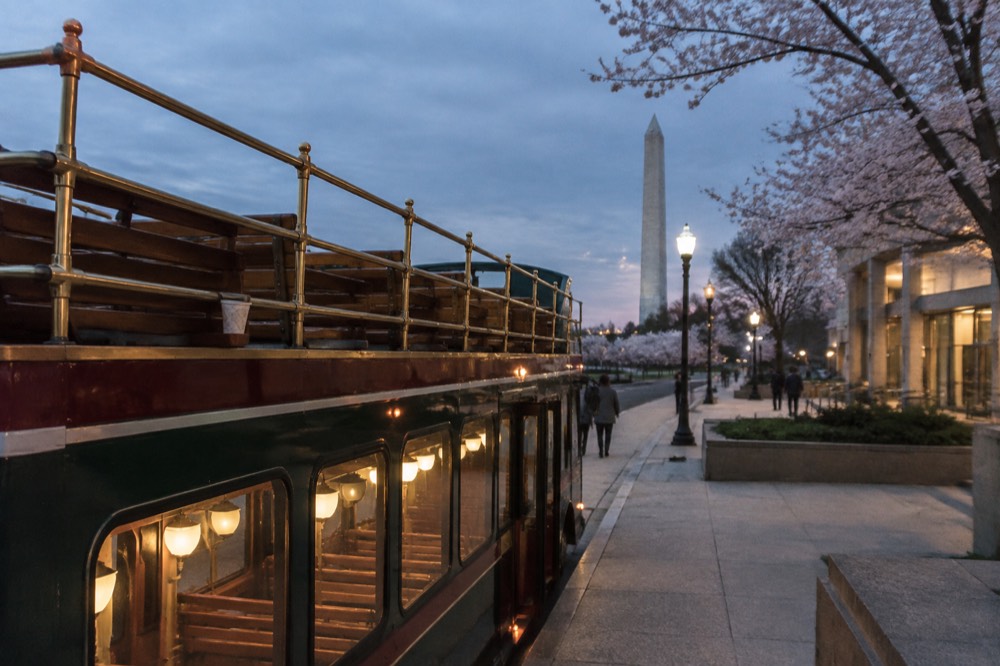
The tours themselves are timed to this curve, which is not an accident. The Moonlight Trolley, the roster's most-reviewed product at 4.5 across 4,198 reviews, runs a 2 hour 30 minute loop from $59.95, and its departures are built to put guests at the marquee memorials inside the post-darkness window rather than at sunset. The Dusk Bus Tour, National Mall option, from $64 with a 4.6 rating across 315 reviews, is named for the same logic: it catches the monuments at the transition from dusk to fully lit, and the best bus tour in Washington DC writeup compares its timing against the longer hotel-pickup route.
Those three represent the format spread for this timing question: a trolley loop, a bus loop, and a walking tour, all priced between $40 and $64. The trio exists because the right answer depends less on budget than on how you want to spend the window. A trolley covers the most ground per hour, a bus handles the long east-west distances of the Mall without your feet, and a walking tour puts you inside the memorials, at the base of the stones, for the whole time.
Which Tour Format Matches Your Evening Window?
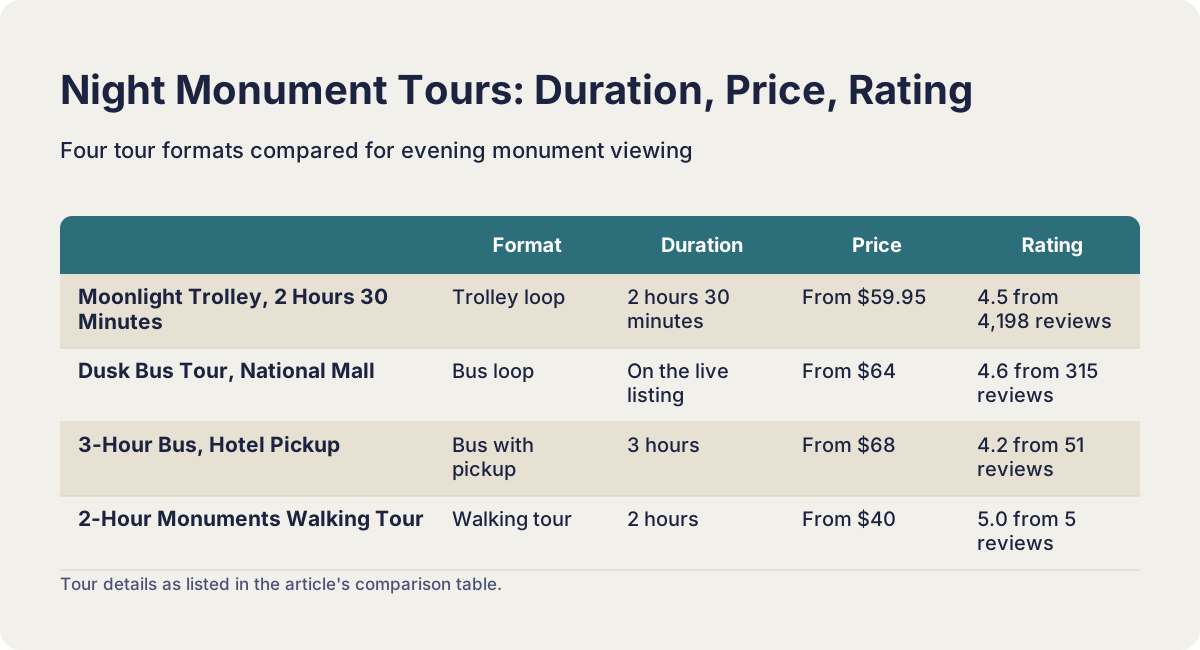
Match the format to your window, not the other way around. With two hours or less, the 2-Hour Monuments Walking Tour at $40 keeps you inside the memorials the entire time. For the widest coverage in one evening, the Moonlight Trolley's 2 hour 30 minute loop from $59.95 is the most-reviewed choice. For hotel pickup and a three-hour sweep, the 3-Hour Bus, Hotel Pickup option at $68 collects you where you sleep.
The four monuments-by-night products on this site's roster break down cleanly on time and money:
| Tour | Format | Duration | Price | Rating |
|---|---|---|---|---|
| Moonlight Trolley, 2 Hours 30 Minutes | Trolley loop | 2 hours 30 minutes | From $59.95 | 4.5 from 4,198 reviews |
| Dusk Bus Tour, National Mall | Bus loop | Duration on the live listing | From $64 | 4.6 from 315 reviews |
| 3-Hour Bus, Hotel Pickup | Bus with pickup | 3 hours | From $68 | 4.2 from 51 reviews |
| 2-Hour Monuments Walking Tour | Walking tour | 2 hours | From $40 | 5.0 from 5 reviews |
The walking option deserves a specific note on its rating: a perfect 5.0 from its small early review count, five reviews, is a promising signal but not a proven track record the way 4,198 reviews is. It is also the cheapest monuments-by-night tour on the roster and the only one on foot. For a traveler whose real question is timing, the walking format has a hidden advantage: it never waits for a vehicle, so the entire two hours is spent at the stones rather than in transit between them.
The trolley, run by Historic Tours of America, is the volume leader for a reason. It departs from the Washington Welcome Center at 1001 E Street NW, with Union Station as an alternative boarding point at 50 Massachusetts Avenue NE, and it compresses the full lit-up loop into one sitting. For visitors who have exactly one free evening and want to see the maximum number of illuminated memorials without route-planning, that is the whole value proposition.
For families weighing whether an evening loop works with kids' bedtimes, the night tours for families with kids guide works through the age-by-age logistics, including which formats flex and which are locked to a schedule.
Are The Monuments Open All Night, And When Do Rangers Leave?
Yes, the outdoor memorial grounds are open 24 hours a day, every day, per the National Park Service. Rangers are on duty from 9:30 a.m. until 10:00 p.m. daily. After 10 p.m. the grounds remain open and lit, but they are unstaffed by rangers, so any tour running later than that is showing you the memorials without interpretive staff present unless the operator's own listing says otherwise.
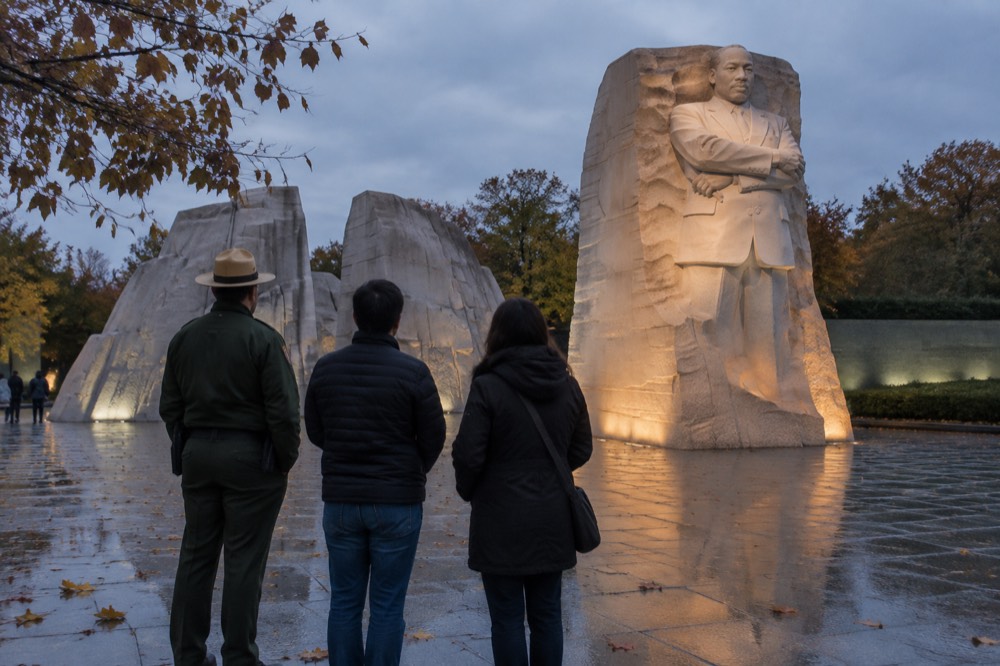
This is the distinction that trips up the most planning. "Open 24 hours" and "staffed 24 hours" are different facts, and the Park Service is explicit about the second one: ranger hours run 9:30 a.m. to 10:00 p.m., per the agency's official hours page for National Mall and Memorial Parks. United States Park Police patrol around the clock, which is a separate function from interpretation. So a 9 p.m. visit falls inside the staffed window and a 10:30 p.m. visit does not, and both are equally legal and equally lit.
One corner of the park does close at night, and it is not the memorial core. East Potomac Park, the peninsula south of the Mall that holds Hains Point, closes to vehicles, pedestrians, and bicycles daily from 1:00 a.m. to 5:00 a.m. under the park's compendium. Tour routes do not typically depend on it, but a late-night cyclist or runner planning a loop should know. The compendium itself, the Superintendent's Compendium for National Mall and Memorial Parks, is the authoritative document for closures like this one.
For the safety angle, which is really a timing-adjacent objection, the separate question of whether the Mall is a sensible place to be after dark has its own full treatment in the National Mall at night safety guide. The short version relevant here: official sources do not prohibit night walking on the Mall, the memorial core scores as one of the city's lowest-risk areas in available crime analyses, and Destination DC's own safety guidance, which notes that violent crime in the city is at a 30-year low, advises standard urban awareness rather than avoidance.
Which Nights And Seasons Are The Quietest At The Lit Monuments?
Weeknights from Monday through Thursday run noticeably quieter than Friday through Sunday, and the shoulder seasons, late September through October and January through February, combine early sunsets with thin crowds. The single quietest regular window is a weeknight after 9:30 p.m. in late fall or winter, when the lights are fully on, the buses have left, and the cold has filtered the crowd down to a handful of people.
Season changes the equation twice over. It moves sunset, and it moves the crowd. A planning sketch, not a promise:
| Season | Early Sunset? | Crowd Level At The Memorials | Best Strategy |
|---|---|---|---|
| Summer (June to August) | No, latest of the year | Heaviest, with tour groups peak season | Book any guided tour early; expect company everywhere |
| Fall (September to November) | Yes, moving earlier weekly | Moderate, thinning after Labor Day | The sweet spot: early dark, fading crowds |
| Winter (December to February) | Yes, earliest of the year | Lightest, especially weeknights | Arrive at full dark; dress for it; near-private memorials |
| Spring (March to May) | Getting later | Heavy, cherry blossom season is peak | Book ahead; expect festival crowds through early April |
The fall row is the one locals guard. Sunset slides earlier week by week, which means the best light arrives before most visitors have finished dinner, and the school-trip wave has passed. By late October a 7 p.m. arrival lands you in full darkness with the postcard sky and a fraction of the summer crowd. The Halloween season brings one more wrinkle worth knowing: ghost tours and haunted pub crawls across the city run year round, and the fresh reporting on DC's fall season found no verified seasonal price surge or schedule change for evening tours, so October rates look like every other month's rates, a point the Washington DC Halloween ghost tour season guide covers in full. The full index of guides sits on Washington DC Night Tours.
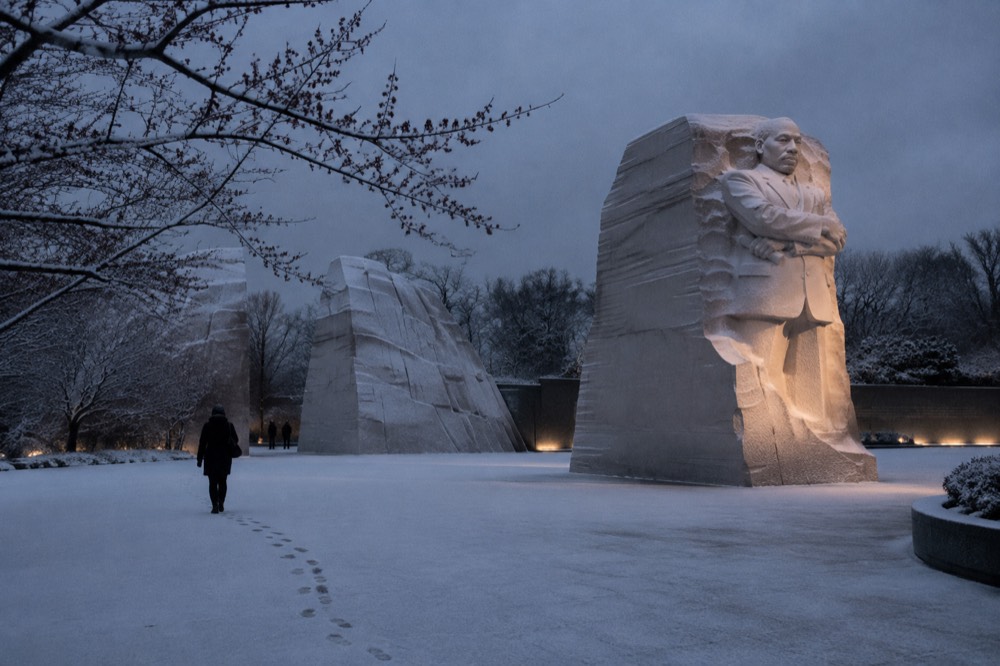
Winter is the connoisseur's pick. The cold does real work clearing the plazas, and the memorials under snow, when it comes, are among the most photographed scenes in the city. The trade is honest: you will want the right layers, and the what to wear on a DC night tour guide covers the clothing math for exactly these evenings, from summer humidity to the wind off the Potomac in January.
The day-of-week question has a simpler answer. Saturday is the busiest night at the memorial core, Friday close behind. Sunday evening softens as weekend visitors drive home. Monday through Thursday are the nights when a 10 p.m. visit can feel close to private, and when the guided tours themselves have the most availability. That last point matters for booking: the popular departures sell out first on weekends, and the quiet nights are also the nights you can decide on the same afternoon.
How Late Can You Stay, And What Closes That Does Not Obvious?
You can stay on the outdoor memorial grounds as late as you want, all night if you choose, because they never close. What closes is the Washington Monument's interior, which runs 9:00 a.m. to 5:00 p.m. daily as a separate timed-ticket operation, meaning no night tour on this roster goes inside or up the monument. Tours view it illuminated from the grounds, which is the only after-dark access that exists.
The Washington Monument distinction is the one fact to hold onto, because listings and word of mouth blur it constantly. The obelisk's grounds are part of the 24-hour park. Its interior, the elevator to the observation level, is a daytime-only operation with its own hours page, published by the Park Service: open daily 9:00 a.m. to 5:00 p.m., closed on Independence Day and Christmas plus one monthly maintenance day. After dark, everyone, tour or no tour, experiences the monument from outside.
The same logic extends across the memorial core. The Lincoln Memorial's steps, chamber, and exterior are night-accessible; interior exhibit spaces follow their own daytime operations, a distinction the Lincoln Memorial at night page covers in more depth. The Jefferson, the MLK Memorial, the WWII Memorial, the Vietnam Veterans Memorial, the Korean War Veterans Memorial: all outdoor, all lit, all open around the clock. A night tour's route is therefore never limited by closing times, only by the operator's schedule and the evening's length.
Two recent construction notes are worth a conditions check before a visit centered on a specific memorial. The Lincoln Memorial Reflecting Pool area, its walkways and adjacent grass medians, has seen extended public closures for repairs, and the Park Service's current conditions page carries the live status. The WWII Memorial's lighting modernization wrapped up in spring 2026, so its fountain and lights are the upgraded set. Neither affects the 24-hour access rule; both can affect what you stand next to.
What Should You Wear And Bring For The Lit-Up Window?
Dress for the temperature at your arrival hour plus one, not the afternoon's, because the Mall after dark runs cooler than the day, especially near the water, and you will be standing still at memorials more than you expect. Flat shoes matter more than warmth on the walking tours. Bring a phone or small camera, but plan photos in the blue-hour window rather than after the sky goes fully black.
The clothing question is really a timing question wearing a coat. The same October evening that demands a jacket at 8 p.m. would have been shirtsleeves at 4 p.m., and visitors who dress for the afternoon spend the lit-up window cold. The wind channel along the Reflecting Pool and off the Potomac is real in every season. Summer evenings are the exception in your favor: the post-sunset drop is the relief the whole day was waiting for.
For the gear side, the practical list is short. A phone handles the memorials fine, and the one photography rule worth internalizing is the blue-hour edge: the sky's gradient makes the illuminated stone pop, and once the sky is black, the contrast flattens. Tripods are a gray area for casual visitors; the walking tours move at a pace that does not favor them anyway. Water, whatever layers the season calls for, and nothing heavier, because the distances on the Mall are long and the benches are where they are.
A packing allowance sketch by season:
| Season | Evening Comfort Range | What To Bring |
|---|---|---|
| Summer | Warm, humid early, pleasant after dark | Water, light layer for air conditioning en route |
| Fall | Cool to cold after sunset | Jacket, hat for late evenings, closed shoes |
| Winter | Cold, wind off the water | Heavy coat, gloves, hat, warm layers under |
| Spring | Cool, variable, blossom-season crowds | Layered jacket, comfortable shoes for crowding |
Those comfort ranges are planning allowances, not forecasts; check the evening's actual forecast, because a 15-degree swing between an early fall week and a late one is normal in Washington.
Putting It Together: A Sample Evening Timeline
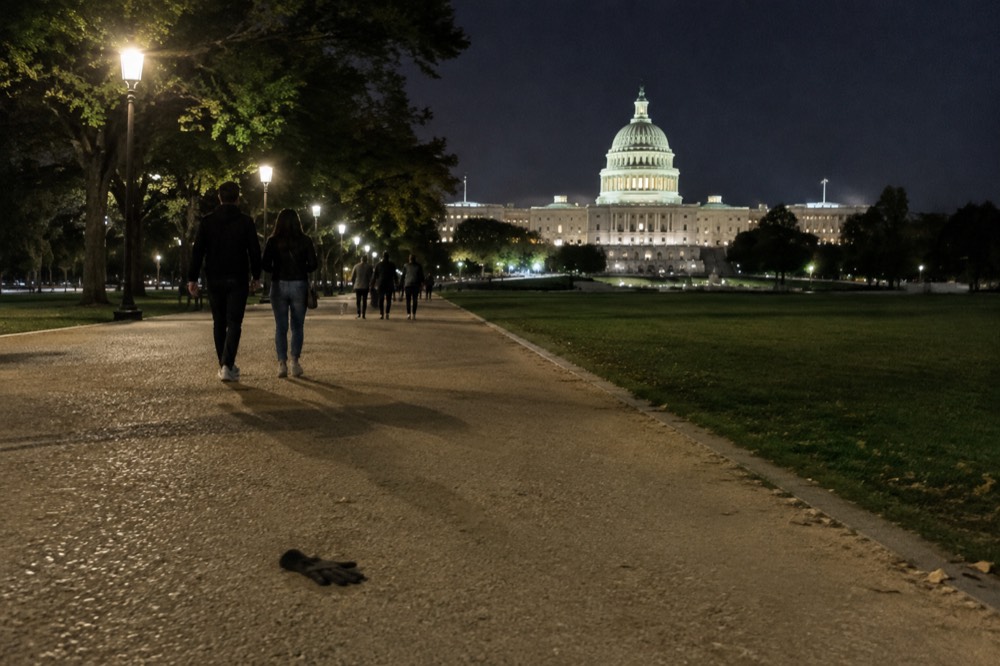
A reliable plan for most of the year: start at the Lincoln Memorial about an hour after sunset, work east along the Reflecting Pool to the WWII Memorial, then continue to the Washington Monument grounds as the sky goes fully black, finishing between 9:30 and 10. That sequence rides the blue hour west to east, puts the busiest stones behind you before the 8 p.m. peak fully forms, and ends as the crowds drain.
The guided version of that timeline is what the tours sell, each in its own format. The 3-Hour Bus, Hotel Pickup option from $68 is the longest single-evening sweep on the roster, three hours with pickup at your hotel, meeting near 790 Pennsylvania Avenue NW by the National Archives for guests making their own way. It fits the traveler who wants the timeline executed for them, door to stones, with the widest coverage of any bus product here. Its 4.2 rating across 51 reviews is the smallest review pool among the bus options, a fact to weigh honestly rather than a red flag.
The 2-Hour Monuments Walking Tour from $40, departing from the Gifts and Cafe on Henry Bacon Drive NW, is the timeline compressed to its essence: two hours, on foot, inside the memorial spaces, no transit time at all. For a visitor with a fixed late dinner reservation, it is the format that ends on time. And for the traveler deciding between spending the evening with a guide or solo, the deeper comparison of approaches is in the best way to see the monuments at night, which weighs the guided loop against the self-directed walk on the same timing facts used here.
The self-directed version costs nothing but shoes, and the 24-hour access rule means your own timeline has no operator's schedule attached to it. What the tours add is not access, the access is free, but narration, route certainty, and the removal of every small decision: where to stand, when to move, what you are looking at. Whether that is worth $40 to $68 is a fair question with an honest answer that depends on how much the evening's limited hours are worth to you.
Common Questions About Seeing The Monuments At Night
What's The Best Way To See The Monuments In DC?
On foot for immersion, or by trolley or bus for coverage. The 2-Hour Monuments Walking Tour at $40 keeps you inside the memorial spaces the whole time, while the Moonlight Trolley at $59.95 covers the full lit-up loop in 2 hours 30 minutes. Self-directed walking is free and the grounds are open around the clock, so the choice is narration and coverage versus your own route.
What Time Do The Monuments Turn On Their Lights?
There is no posted lighting schedule. The memorials read as fully lit from the end of civil twilight, roughly 45 to 75 minutes after sunset depending on season. Since the grounds never close, arriving late never costs you the lights, only the blue-hour sky behind them.
Is National Mall Safe At Night?
Official sources do not prohibit night visits, the outdoor areas are open 24 hours, and the memorial core scores among the city's lowest-risk areas in available crime analyses. United States Park Police patrol around the clock, though rangers finish at 10 p.m. Standard urban awareness, the kind Destination DC publishes for the whole city, is the guidance that applies.
Can You Go Inside The Washington Monument At Night?
No. The monument's interior operates 9 a.m. to 5 p.m. daily as a separate timed-ticket visit, and no tour on this roster goes inside or to the top. After dark, the monument is viewed illuminated from the grounds, which is the only nighttime access that exists for anyone.
What Is The Quietest Time To See The Lit Monuments?
A weeknight after 9:30 p.m. in late fall or winter. The lights are fully on, the tour buses have gone, rangers have finished at 10 p.m., and the cold filters the crowd to a handful. Weekends and cherry blossom season are the opposite: expect company at every memorial.
The timing objection dissolves once the official facts are on the table: the lights are always on, the grounds never close, and the only real deadline is the one you set for your own evening. Pick the window, pick the format that fits it, and the rest of the plan writes itself.