What Is The Dress Code For A DC Dinner Cruise?
The honest answer to the DC dinner cruise dress code question, based on the operator's own published policy: what cocktail attire means, what to skip, and what to wear on the party yacht.
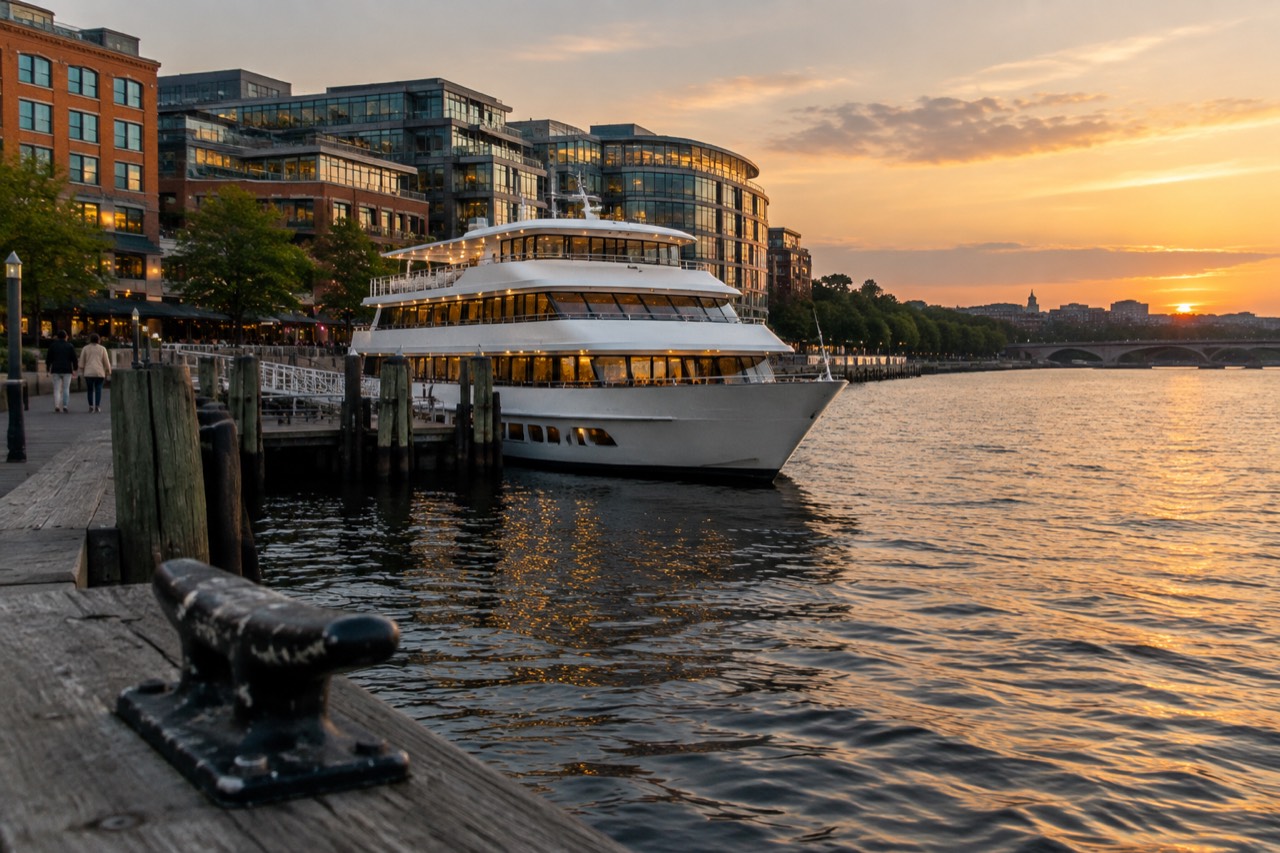
The dress code question is the one that surfaces in the hour before checkout. The route is decided, the date is picked, the price is acceptable, and then the screen goes dark while everyone in the party stands in front of a closet. The good news is that the main Potomac dinner cruise operator publishes an actual dress code policy, so this is not a matter of guessing or folklore. The better news is that the policy is more relaxed than most people fear, and it draws a clear line between the evening dinner sailings and the more casual daytime ones.
What Is The Dress Code For A DC Dinner Cruise?
The operator's own policy recommends cocktail attire for its Signature Dinner and Premier evening cruises: collared shirts, blouses, sports coats, slacks, and dresses. The same policy strongly discourages casual jeans, t-shirts, shorts, gym shoes, and flip-flops for those evening departures. Daytime brunch and lunch sailings run a noticeably more relaxed standard, khakis, nice jeans, dresses, and button-up shirts, so the answer depends on which sailing you book and when it departs.
That is the whole policy in two sentences, and it comes straight from the cruise operator's own published FAQ rather than from a travel blog's interpretation of it. The distinction that trips people up is that "dinner cruise" covers more than one product. The evening Signature Dinner cruises, the ones most people mean when they say dinner cruise, are the ones with the cocktail-attire recommendation. The brunch and lunch versions of the same boat have a separate, looser standard printed in the same policy.
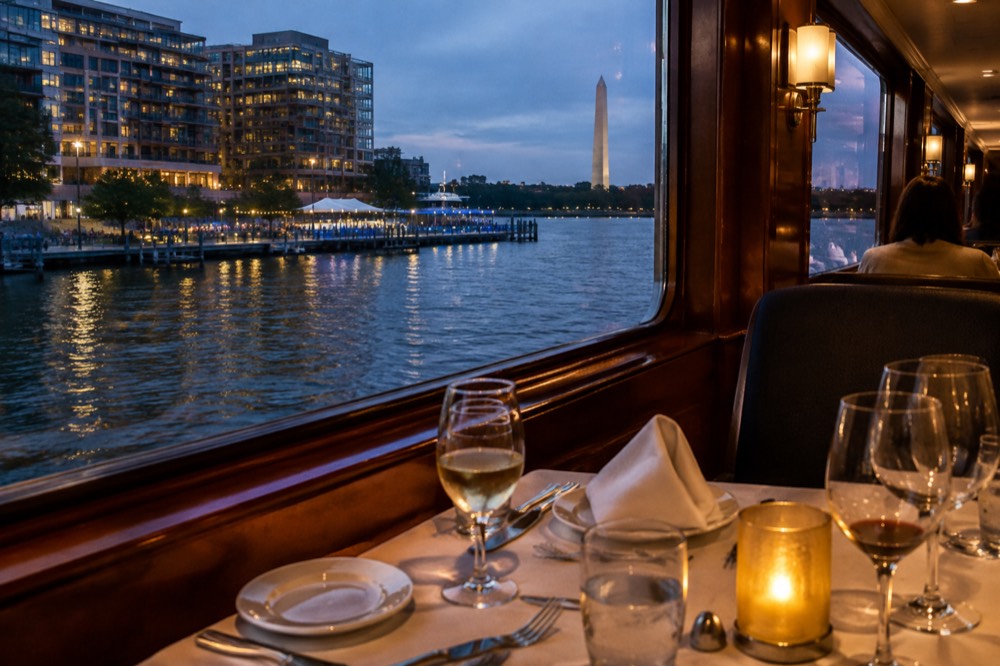
A few practical notes before the details. The policy language is "recommended" and "strongly discouraged," not "prohibited." Nobody at the gangplank is turning away a guest in clean dark jeans on a Signature Dinner sailing, and the discouragement is aimed at beachwear and gym clothes rather than at any specific garment. But the recommendation is also the social reality of the room: these are plated-table, DJ-and-dance-floor evenings where a large share of the guests treat it as a date night, and dressing to the policy means matching the room rather than standing out in it.
The cruise this policy governs is the one this site covers in depth elsewhere: the Buffet Dinner Cruise, the most-reviewed cruise on the roster at 4.2 across 936 reviews, from $74.48, sailing 2 to 2.5 hours from Pier 4 at The Wharf. If you are still working out the broader logistics, the timing question is answered in how long DC City Cruises actually run, and the full picture of evening sailings is in the Potomac River night and sunset cruise guide.
What Does "Cocktail Attire" Actually Mean On A Boat?
In practice, cocktail attire on the Potomac dinner cruise means one step below what you would wear to a nice restaurant on a Saturday night. For men, that reads as a collared shirt with slacks or dark chinos, with a sports coat optional rather than expected. For women, it reads as a dress, a skirt-and-top combination, or dressy separates. Nobody needs a suit, a tie, or formal wear.
The word "cocktail" scares people because it evokes black tie and cocktail parties in hotel ballrooms. On this boat it functions as a floor, not a ceiling. The operator's own examples are collared shirts, blouses, sports coats, slacks, and dresses, and the sports coat is listed as one option among several, not a requirement. A man in a navy button-down, dark chinos, and leather shoes is fully inside the policy. A woman in a knee-length summer dress with a wrap for the deck is fully inside it too.
The part of the policy that does the real work is the discouragement list: casual jeans, t-shirts, shorts, gym shoes, and flip-flops. Read those five items as the line. Dark, well-fitted jeans with a blazer sit in a gray zone that most guests cross without comment, and the operator's own daytime policy explicitly allows "nice jeans," which tells you the fabric is not the issue, the total look is. Ripped jeans, graphic t-shirts, athletic shorts, and running shoes are the outfits the policy is written to keep off the evening deck.
There is also a seasonal honesty note worth making. Washington summers are humid, and the walk from the Pier 4 gate at The Wharf to the boat can be several minutes in open sun. Guests who overdress for formality's sake and then spend the first hour uncomfortable have missed the point of the policy. Lighter fabrics, short-sleeve collared shirts, and breathable dresses are all consistent with cocktail attire in July. The full year-round picture of what Washington evenings feel like is covered in what to wear on a Washington DC night tour, which applies to the walk to the pier as much as to any monument walk.
| Sailing type | Operator's stated standard | Examples the policy names | Explicitly discouraged |
|---|---|---|---|
| Signature Dinner (evening) | Cocktail attire recommended | Collared shirts, blouses, sports coats, slacks, dresses | Casual jeans, t-shirts, shorts, gym shoes, flip-flops |
| Premier (evening, plated) | Cocktail attire recommended | Same as Signature Dinner | Same discouragement list |
| Brunch or lunch (daytime) | More casual | Khakis, nice jeans, dresses, button-up shirts, blouses | Not stated as strictly |
A few practical notes follow from the table. The Signature Dinner and Premier sailings share the same stated standard and the same discouragement list, so the plated Premier service does not call for anything dressier than the buffet-style Signature Dinner. If you own one outfit that satisfies the evening standard, it works for both. The daytime sailings are the relaxed ones: khakis, nice jeans, dresses, button-up shirts, and blouses are all named as acceptable, and no strict discouragement list is attached. If your plans include both a brunch and an evening sailing, plan the dressier outfit for the evening and keep the daytime look simple.
One last planning tip: build the outfit around the discouragement list rather than the examples. If your planned outfit contains none of the five discouraged items, you are almost certainly fine, even if it does not match any named example exactly. The policy is written to exclude a specific kind of casual look, not to require a specific kind of formal one, and guests who treat it that way rarely give it a second thought.
Is There A Dress Code On The Party Yacht Cruise?
The party yacht is a different product from the dinner cruise, run by a different operator, and its listing does not publish a cocktail-attire policy. It is an adults-only, 21-plus open-bar cruise from $75, 2 hours, departing Georgetown Waterfront, and the practical standard guests report is smart-casual nightlife clothing rather than dinner attire. Anything beyond that is on the live listing.
This is where the two boats get conflated, and the conflation matters because the answer is genuinely different. The Buffet Dinner Cruise is City Cruises, the Spirit of Washington brand, departing Pier 4 at The Wharf, with the published FAQ policy described above. The Boomerang Party Yacht Cruise is a different brand entirely, departing Washington Harbour in Georgetown, and it is a party product: open bar, music, 2 hours, strictly 21 and up per the operator's own listing. Nobody wears a sports coat to an open-bar party yacht, and nobody should feel they need one.
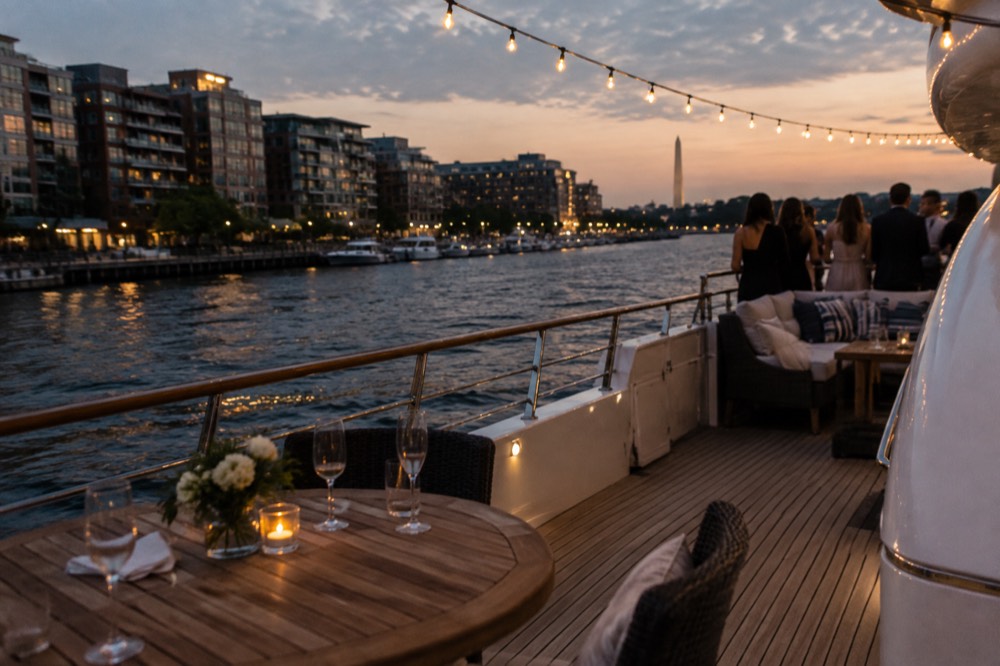
What the party yacht does share with the dinner cruise is the deck reality. Both boats spend part of every sailing with open outdoor decks, and both dock at waterfront piers where the walk from the street matters. Flat-soled or low-heeled shoes beat stilettos on any boat, full stop, and this is the one piece of clothing advice that applies to every product on the Potomac at night regardless of operator. Heels on a moving deck are a balance problem, not a fashion problem.
What Should You Actually Pack Beyond The Outfit?
Pack for three environments, not one: the air-conditioned interior, the open deck where the wind comes off the river, and the walk from the pier gate to the boat. A light layer for the deck is the single most useful item, because the interior runs cool for dining while the deck can be breezy even in summer. Beyond that, the essentials are flat-soled shoes and a small bag.
The layer point deserves emphasis because it is the most common miss. The dinner cruise interior is climate controlled and set for a room full of seated, dining guests, which in practice means it runs cool. The deck, meanwhile, gets the river breeze, and on spring and fall evenings that breeze is genuinely cold, not refreshingly cool. A wrap, a cardigan, or a light jacket solves both environments. Men carrying a sports coat get the layer for free, which is the quiet practical argument for the jacket the policy already lists as an option.
Bags are the second practical question. The boarding process at Pier 4 is a walk-down pier with a gangway, and large luggage-style bags are a nuisance on any boat. A small crossbody, a clutch, or a slim day bag fits the evening better, and anything you would not want to keep track of at a dinner table should stay in the hotel. The boarding window typically opens 30 to 60 minutes before departure, which means there is standing time on the pier, another argument for comfortable shoes.
| Item | Why it earns its place | Notes |
|---|---|---|
| Light layer or wrap | Interior runs cool, deck gets the river breeze | The single most-reported "wish I'd brought" item |
| Flat or low-heeled shoes | Gangway, moving deck, pier walk | Applies to every Potomac night product |
| Small bag | Table space and gangway are tight | Large bags are a nuisance on board |
| One-handed camera or phone | Photos at the rail while holding a drink | Monument views appear on the turn |
How Formal Is Too Formal For A Dinner Cruise?
Black tie is too formal, and so is anything you would be afraid to spill a buffet plate on. The dinner cruise is a covered, casual-elegant dining room with a DJ, not a gala, and the operator's policy tops out at "cocktail attire recommended," sports coat optional. A full suit with a tie, a floor-length gown, or anything dry-clean-only belongs on a different kind of evening.
The over-dressing risk is real because the word "cruise" pulls the imagination toward formal nights on ocean liners. This is not that. The Buffet Dinner Cruise is a buffet-format sailing, which is itself a signal: the operator's own product structure tells you the evening is relaxed enough that guests carry plates. The plated Premier format, 2.5 to 3 hours per the operator's schedule information, sits slightly further up the formality scale, which is why the same cocktail-attire policy covers both, but neither asks for a tie.
A useful test: would the outfit survive a gust of wind on the deck, a spilled glass of wine, and two hours of sitting? If any of those three would ruin the garment, it is the wrong garment for this boat. Guests who treat the evening as a nice restaurant dinner, rather than as an event, land exactly where the policy points them.
The other end of the scale has its own failure mode. Arriving in beach clothes does not just violate the printed policy, it puts the guest out of step with a room where most tables have dressed up, and the discouragement list exists precisely for that outcome. The middle of the policy, collared shirt to cocktail dress, is wide enough that nobody needs to buy anything new to fit inside it.
What Do Families And Kids Wear On The Evening Sailings?
Children are held to a relaxed version of the same standard: neat casual, with the policy's discouragement list applying mainly to adults. A kid in a polo or a nice dress is right on target, and a teenager in a button-down or a sundress matches the room. The practical family rule is that the adults set the formality floor and the kids can sit one notch below it.
The operator's published policy does not carve out a separate children's dress code, so the honest answer is that the adult standard, softened, is the working guidance. In practice, families on the evening dinner sailings dress kids in what they would wear to a holiday dinner at a relative's house: clean, neat, not play clothes. Shorts on a child on a summer evening sailing draw no attention at all, which is where the kid standard genuinely diverges from the adult one.
The family angle also connects to a broader planning question that this site covers in detail elsewhere. If the evening is part of a wider trip, the family-specific night tour options, including which cruises and walks suit which ages, are laid out in the Washington DC night tours for families with kids guide. For the cruise itself, the age question matters less than the departure time: an evening buffet sailing is a late night for young children, and the dress question is often easier than the bedtime one.

Does The Dress Code Change With The Season?
No. The operator publishes one dress policy for evening dinner cruises, and it does not issue a seasonal variant, so the cocktail-attire recommendation applies in January and in July alike. What changes is the fabric weight and the layer, not the category: linen and short sleeves in summer, wool and a real jacket in the cooler months, with the deck layer mattering most in spring and fall when the river breeze drops the felt temperature well below the forecast.
Summer on the Potomac is humid, and the walk to Pier 4 can be the warmest five minutes of the whole evening. Light-colored, breathable fabrics make that walk bearable and still read as cocktail attire indoors. Winter is the opposite problem: the interior is warm, the deck is genuinely cold, and the coat you need for the walk becomes the coat you need at the rail. Checking the deck plan matters more in winter, because the sailing is still worth it, the monuments are still lit, but the outdoor viewing time shrinks to short bursts.
Spring and fall are the seasons that catch guests out, because the forecast looks mild and the river breeze does not cooperate. A 65-degree evening on paper can feel like the low 50s on a moving deck with wind coming off the water. This is the season where the wrap or jacket earns its place most emphatically, and it is also the season where Washington's evening temperatures swing hardest between the walk out and the sail home.
Common Questions About DC Dinner Cruise Dress Codes
What Is The Dress Code For A DC Dinner Cruise?
Cocktail attire is recommended for evening Signature Dinner and Premier sailings: collared shirts, blouses, sports coats, slacks, and dresses, with casual jeans, t-shirts, shorts, gym shoes, and flip-flops strongly discouraged. Daytime brunch and lunch sailings run a more casual standard of khakis, nice jeans, dresses, and button-up shirts.
Can You Wear Jeans On The Dinner Cruise?
The operator's policy strongly discourages "casual jeans" on evening dinner sailings but explicitly allows "nice jeans" on its daytime cruises, which tells you the distinction is the overall look rather than the fabric. Dark, well-fitted jeans paired with a collared shirt or blazer sit in a gray zone most guests cross without issue; ripped, faded, or athletic-style jeans are what the policy is written against.
Do You Need A Suit Or Tie For The Premier Cruise?
No. The same cocktail-attire recommendation covers both the buffet Signature Dinner format and the plated Premier format, and a sports coat is listed as one option among several, not a requirement. A collared shirt with slacks is fully inside the policy for either evening sailing.
Is There A Dress Code On The Party Yacht Cruise?
The party yacht operator does not publish a formal dress code the way the dinner cruise operator does. It is an adults-only, 21-plus open-bar cruise, and the practical standard is smart-casual nightlife clothing. Current specifics, if any are added, appear on the live listing.
What Shoes Are Best For A Boat Evening?
Flat-soled or low-heeled shoes, without exception. Every Potomac night product involves a pier walk, a gangway, and a moving deck, and heels turn each of those three into a balance exercise. The dinner cruise policy's discouragement of flip-flops and gym shoes leaves loafers, flats, dress boots, and low heels as the working range.
Does The Dress Code Apply To Children?
The operator's policy does not publish a separate children's standard, so a relaxed version of the adult one is the working guidance: neat casual, clean and not play clothes. Shorts on a child on a summer evening sailing draw no attention, and the room generally reads a family table by the parents' outfits rather than the children's.
The short version of all of this: the dress code on the DC dinner cruise is a published, moderate, real policy, not a guessing game. Dress one notch below a nice restaurant, bring a layer for the deck, wear shoes that can handle a gangway, and the outfit question is settled before the boat leaves Pier 4. More on the evening waterfront, including what else pairs with a night on the water, is on Washington DC Night Tours.